Advertisement

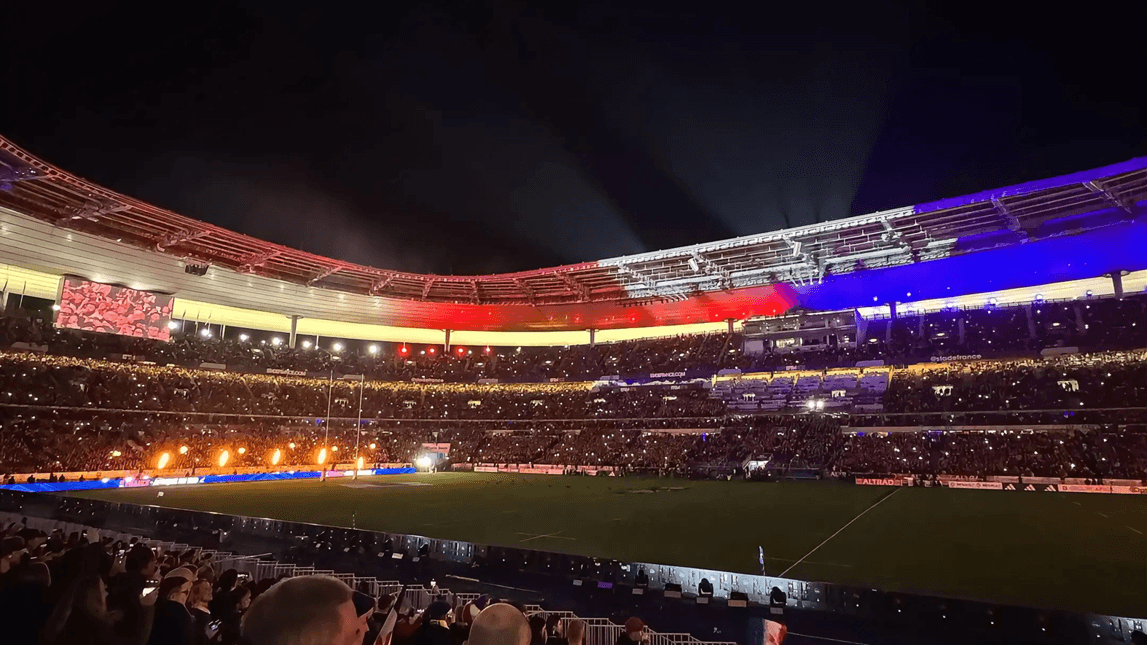


The 2026 Six Nations begins with an air of unfamiliarity. Unfamiliar thanks to the tournament kicking off on a Thursday evening, but also unfamiliar due to the absence of familiar names from both teams in the opening fixture. Ireland travel to Paris battling a host of injuries, as well as the untimely ban for Bundee Aki, whereas for France, the changes have largely been by their own design.
Having only just come to terms with the shock of Fabien Galthié’s big-name omissions from his initial squad, the rugby world was then rocked by a seismic aftershock in the form of Uini Atonio’s cardiac event and international retirement. Despite the potential magnitude of this upheaval, the overriding feeling on seeing France’s team selection for their Six Nations opener is that this is a squad bursting with quality; the backline combinations are particularly tasty.
Bursting with quality though it is, this is a France side lighter on experience than it has been in recent years. Of the players to have played for France since the 2023 Rugby World Cup, only Antoine Dupont remains of the eight players with over 50 caps. That said, the core of the side developed by Fabien Galthié remains. There are plenty of familiar names still, whether that is old reliables from recent Six Nations tournaments, or from big knockout games in the Champions Cup with their club sides.
*Players selected to play against Ireland in italics
France come into the tournament as favourites with the bookmakers. That is partly driven by home fixtures against Ireland and England, but the quality of this side reflects that favourites’ tag. That is not to say France will have it easy in this tournament or on Thursday evening, and we’ve picked four key focus areas for Les Bleus.
Amidst the understandable pre-match focus on the return of Mathieu Jalibert, it’s easy to forget that Thursday evening also marks the return of Antoine Dupont in a French shirt following his horror knee injury against the same opposition in last year's championship.
The new halfback axis, or La Charnière as it is known in France - literally ‘the hinge’ - is the stand out selection. The world’s best scrum-half alongside, at least based on club performances, the world’s form fly-half is a delicious prospect, albeit one that Fabien Galthié has not always been entirely convinced by.
It’s true that Galthié has long favoured the Toulousain partnership of Dupont alongside Romain Ntamack, but the idea the Dupont/Jalibert partnership has been a failed one is overbaked.
They were the starting halfback pairing when France comfortably beat the All Blacks in the opening game of the 2023 RWC, and started together in last year’s championship when France’s inability to catch belied some breathtaking attacking rugby in their 1 point loss to England. Jalibert’s performance in France’s quarter final exit to South Africa in that World Cup has been subject to some lazy revisionism, largely based around one skewed kick in what was otherwise a composed performance in one of the greatest games we have ever witnessed.
The UBB star is a far better player now than he was in either of those previous tournaments, possessing a broader kicking game and crucially, exhibiting more willing in defence. It’s now incumbent on the French coaching staff, and the pairing itself to find a way to make the partnership work. France displayed little by way of imagination in attack in the Autumn, and if the duo can get close to the sum of their parts, stand by for something special.
For a country traditionally revered for the storied ferocity of its props, the tighthead position has been problematic for some time, and that’s been brought into even sharper focus with the untimely retirement of Uini Atonio, a man who has previously coaxed back into international colours to fill the problem void.
Dorian Aldegheri’s selection is not glamorous, but feels a shrewd and functional pick. Other tightheads may offer more around the park but his mission is a fairly straightforward one, and that’s not to go backwards. Aldegheri’s discipline at scrum time and in the loose can err on the sloppy side, but his starting here makes sense.
On the bench, Régis Montagne is quietly developing into a promising international tighthead, offering plenty in the carry and his scrummaging is definitely on an upwards trajectory. This tournament will be an instructive gauge of whether it his set-piece is up to international standards.
The loosehead side of the scrum looks well stocked. Jean-Baptiste Gros has quietly asserted himself as a key man for France over the last two seasons, whilst Rodrigue Neti has benefited massively from the game time afforded by Cyril Baille’s injuries, and he rightly usurps his Toulouse teammate for the no.17 jersey against Ireland.
Damian Penaud’s omission from this Six Nations was the most eye-catching among some punchy selection calls. It perhaps puts undue pressure on his replacement on the right wing, Section Paloise’s Theo Attisogbe, but evidence would suggest he’ll take it in his stride.
Only 21, Attisogbe’s ascent from Under 20s starlet, to figurehead in Pau’s march up the Top 14 and now fully fledged France starter, has been a seamless one. He was outstanding on France’s tour to New Zealand last summer and looked every bit the international class winger, and is now trusted with a starting berth for this Championship tilt.
Arguably more adept at fullback, he is excellent under the high-ball and possesses an underrated kicking game. Scratch beneath Penaud’s headline omission and you can empathise with Galthie’s decision to make the switch, although Attissogbe does not yet possess Penaud’s physicality, and he will have his work cut out defensively against a resurgent Jacob Stockdale. What France may miss in Penaud’s physicality and raw try scoring prowess, they gain in workrate, versatility, and security. Attissogbe still has plenty of cutting edge of his own - his electric feet make him one of the most exciting open field runners in France.
Penaud may still come again for France. After all, 40 tries in 59 internationals is an extraordinary strike rate. The time now though, is for Attisogbe. His selection is wholly merited, and don’t be surprised to see him light up the Stade de France on Thursday night.
Galthié has again opted for the now-customary 6–2 split, enabled by the flexibility of his starting backline. The story, however, is in the balance between starters and replacements in the back five of the pack.
In the engine room, Galthié’s starting second-row pairing is fascinating, seemingly focused on mobility and ball-carrying. Both Charles Ollivon and Mickaël Guillard have plenty of experience in the back row, while the replacements of Hugo Auradou and Manny Meafou represent a more traditional second row pairing. Manny Meafou as an impact option remains devastating - a formula that used to great effect in last year’s Six Nations - while Hugo Auradou is more in the ‘technically proficient’ than he is ‘high-impact’ category.
Galthié has favoured experience in the back row too in the selections of Anthony Jelonch and François Cros. Great players both, if there is one criticism of their selection it would be a possible lack of dynamism. Dynamic, aggressive, and intelligent, Lenni Nouchi, therefore, represents an exciting option off the bench. He is arguably the sort of difference-maker in key moments that France have lacked of late.
There is plenty more game-changing ability in the replacement backs as well. 20 year-old Kalvin Gourgues is a great option for the no.23 jersey as he can cover centre, full-back, and even fly-half if required. He has been in red-hot form for Toulouse this season, and has become a nailed-on starter in their midfield.
And then there is a return for Baptiste Serin, who is approaching his own half-century of Test caps. Followers of the Top 14 (and, indeed, rugby social media) will know just how majestic Serin can be at his best. He may have had his fair share of viral moments over the past few seasons, but such is the richness of France’s scrum-half options, he only has two Test caps for France since the end of the 2021 Six Nations (on 2024’s summer tour to Argentina). Given Dupont’s presence, he may not get too much opportunity to display the full array of his dazzling talents, but he still represents a top-class option to have in reserve.
The quality of Les Bleus’ bench displays the wealth and depth of talent that France have across their nation. With Ireland battling so many injuries, they are shorn of the depth and high-impact bench that they have come accustomed to in recent years. It follows, therefore, that France should run out comfortable winners in the final quarter and they should have designs on a bonus point win. However, there is far too much quality in that Ireland side (and in the coaching box) to say that with any certainty.
France Starting XV (1-15) Jean-Baptiste Gros, Julien Marchand, Dorian Aldegheri, Charles Ollivon, Mickael Guillard, Francois Cros, Oscar Jegou, Anthony Jelonch, Antoine Dupont, Matthieu Jalibert, Louis Bielle-Biarrey, Yoram Moefana, Nicolas Depoortere, Theo Attissogbe, Thomas Ramos
France Replacements (16-23) Peato Mauvaka, Rodrigue Neti, Regis Montagne, Hugo Auradou, Emmanuel Meafou, Lenni Nouchi, Baptiste Serin, Kalvin Gourgues
Ireland Starting XV (1-15) Jeremy Loughman, Dan Sheehan, Thomas Clarkson, Joe McCarthy, Tadhg Beirne, Cian Prendergast, Josh van der Flier, Caelan Doris, Jamison Gibson-Park, Sam Prendergast, Jacob Stockdale, Stuart McCloskey, Garry Ringrose, Tommy O'Brien, Jamie Osborne
Ireland Replacements (16-23) Ronan Kelleher, Michael Milne, Finlay Bealham, James Ryan, Jack Conan, Nick Timoney, Craig Casey, Jack Crowley