Advertisement

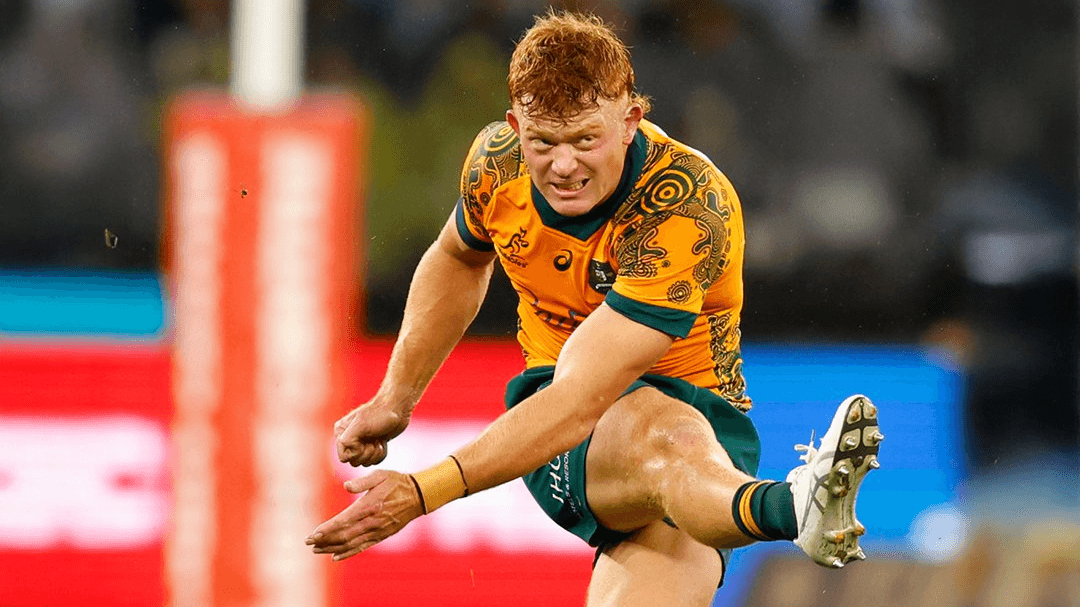
It was the most competitive Rugby Championship in recent memory, thanks in no small part to a Wallabies resurgence under Joe Schmidt. After a Lions series that hinted
at green shoots, followed by a historic win in South Africa, the tournament looked wide open.
But discipline issues crept in against Argentina, where golden chances to climb the ladder went begging. Then came the Bledisloe series against an All Blacks side desperate to course-correct and restore pride in the jersey. For all the optimism, it started to feel like history repeating itself.
Despite the growth and improvement the Wallabies have shown in 2025, their final record sits at just four wins from a possible ten. The question now is whether this team is still firmly on an upward trajectory, or retracing a well-worn path of flase dawns?
A Consistent Squad Emerging
Schmidt has kept rotation to a minimum. With enough injuries to manage, he followed a conservative approach, and consistent selection in key positions has paid off with more cohesion than we’ve seen in years. By the end of the tournament, fans could identify the front row, locking partnerships, back-row combinations and centre pairing. That’s the beginning of a core group building towards a home World Cup.
Throw in the fact that Tom Wright is the long-term fullback once he returns from injury, and Max Jorgensen has been uncovered as a genuine star, and you can now pretty much pick the Wallabies’ line-up week to week. The real challenge will be keeping players on the pitch and injury free.
On the northern tour, Schmidt now has the luxury to experiment without wholesale disruption. The big question: does he rest some of his frontline stars?
A Leader Australia Can Rally Behind
Harry Wilson may not be the flashiest player, but he embodies everything you want in a Wallaby. He takes the tough carries, makes the defensive stops, and often produces the big moments that keep Australia in contests.
More importantly, he wears his heart on his sleeve. Fans can see he genuinely cares about the Wallabies revival, and he brings his teammates with him. When Wilson speaks to the media, he doesn’t deal in clichés — he shares the triumphs and the heartbreak. He’s become the kind of player the nation can get behind, and one that Australian rugby sorely needs.
The All Blacks Remain the Yardstick
For all the progress the Wallabies have made, it means little until they can reclaim the Bledisloe. In Australia’s crowded sporting market, the Bledisloe is the yardstick by which casual fans measure the Wallabies. And at the moment, it’s still one-sided.
The current format does the Wallabies no favours. With the All Blacks set to tour South Africa more regularly, perhaps it’s time to rethink the Tasman rivalry. Playing New Zealand year after year seems to stall, rather than spark, Australia’s resurgence.
The Number 10 Problem Persists
The biggest hole in this Wallabies side remains at flyhalf. Injuries have kept the carousel spinning, with Tane Edmed emerging as first choice for now, while James O’Connor heads overseas.
The Spring Tour will be decisive, with Tom Lynagh and Ben Donaldson both returning from injury. But whoever is handed the jersey must be backed for at least three games in a row. Without that continuity, the revolving door will keep turning.
Firepower Draining Away
This year may have been Australia’s best shot at silverware, but the Spring Tour brings fresh challenges. The Wallabies lose the experience of Nic White and James Slipper to retirement.
On top of that, stars like James O’Connor, Will Skelton, Tom Hooper, Billy Pollard and Len Ikitau will need to balance international duty with Northern Hemisphere club commitments. It’s a grey area Schmidt and his team can’t afford, and plugging those gaps will be crucial if momentum is to be maintained.