Advertisement

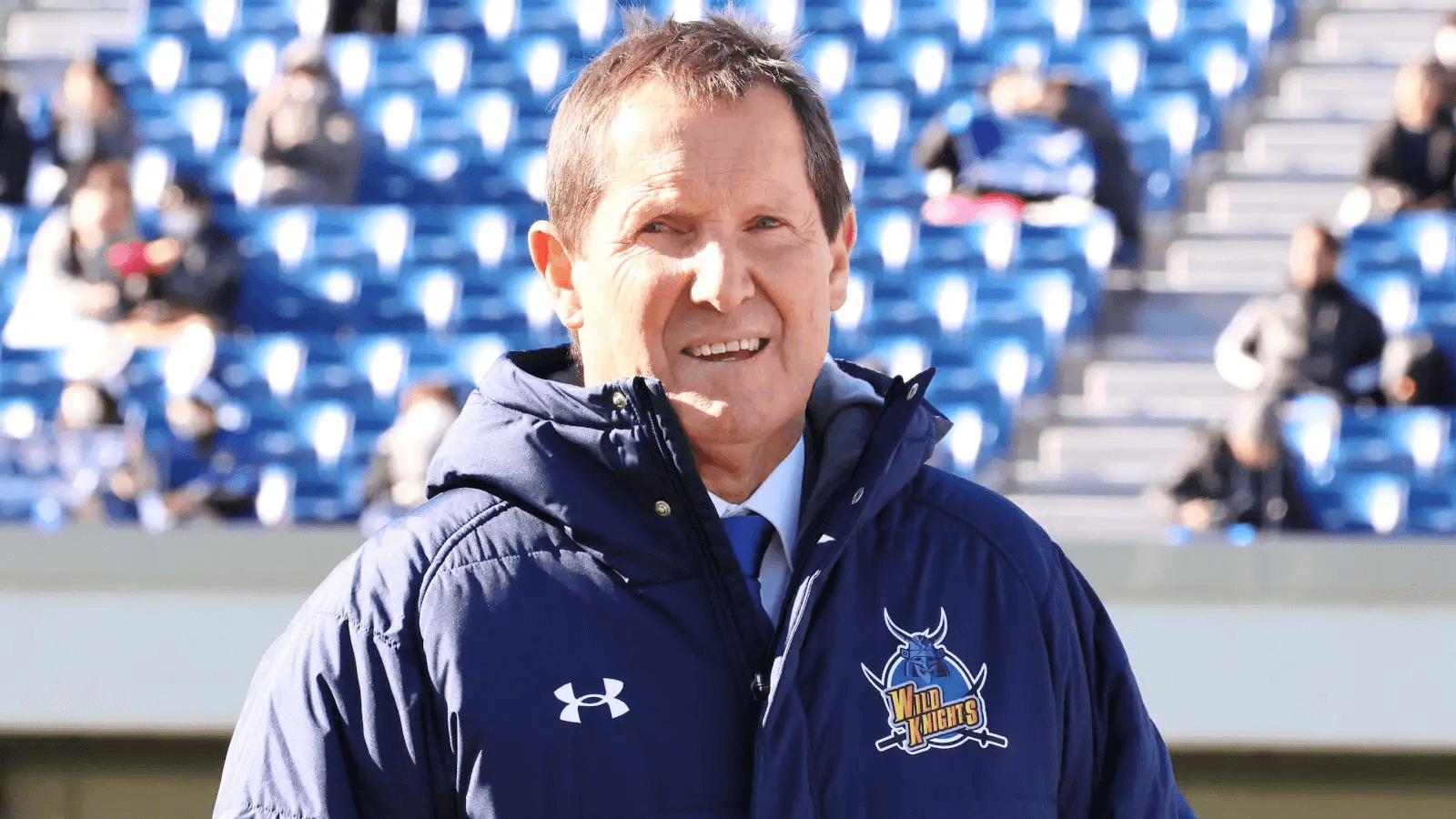
Robbie Deans of Crusaders and Saitama Wild Knights folklore has now spent more than a decade in Japan and has once again led his Wild Knights into a final-four qualification spot with a chance at lifting the Japan Rugby League One title. His side is a one-time JRLO champion in addition to the four Top League titles he won consecutively from 2014-2016 and again in 2021.
For the past two seasons, the Wild Knights were losing finalists in a rugby union championship that's becoming increasingly competitive and physical. Both sides that have beaten them in the past two finals are in the semifinals again this season.
The Wild Knights face one of them, Kubota Spears Funabashi Tokyo-Bay, who defeated them to lift the 2023 title, on Sunday, 25th May.
This will be the fourth time in five seasons that they will meet each other in the Japanese playoffs! The Spears have twice lost to the Wild Knights in semi-finals, in the final Top League season and maiden Japan Rugby League One season, before getting the better of Saitama when they won the league’s second final, 17-15 in 2023.
Wild Knights Head Coach Robbie Deans was in attendance last week to see the Kubota Spears narrowly beat the Suntory Sungoliath as his side enjoyed a weekend bye.
Suntory are a fierce rival of Saitama, and the two teams have dominated club rugby in Japan since the advent of nationwide competition in the Top League and then Japan Rugby League One, with 11 titles between them. Wild Knights beat Sungoliath in the finals of both the last Top League and the inaugural Japan Rugby League One.
One of the benefits of finishing second in the Division at the end of the regular season and having a bye weekend was part of a set of new rule changes this season.
Division One is again a 12-team section, but changes to the finals system meant that six teams participated, with the top two in the final regular season standings going straight to the semi-finals, enjoying the bye a week before. The other teams ranked third to sixth played knockout quarterfinal games, with seedings based on their finishing order.
No matter who won that quarterfinal contest last weekend, Robbie Deans and his team knew they would have a tough semifinal to overcome. We asked how the team had been preparing with the extra weekend off.
Deans said, “We just hone in on what we're doing and our belief that we can win the title. As two teams, we know each other very well, and we have played each other twice this season.
You're not going to change the wheel in this lead-in and probably just emphasise the key components of what we want to do. It's knockout rugby, and you get one chance in a playoff, so it's different. We are embracing that reality and making sure we are crystal clear in what we want to do”.
The two times the Wild Knights played Kubota Spears this season, they narrowly won the first encounter 26-24 before drawing the second game 29-all just a few weeks ago.
The Wild Knights' record was (and still is) staggering, as they have been finalists in all of the JRLO finals thus far and boasted a record of having won all but six of their 54 matches in the qualifying phase before this season. The tight race towards the top at the end of the current season speaks volumes for how far the JRLO has come, especially since Robbie Deans started coaching in Japan in 2014.
“It's been enormous, is probably the only way to describe it. It's changed in two key ways, I think. The first is the player conditioning, and that might contribute to the second point, which is the player IP competing in the JRLO, and there is a large international element.
There are more international coaches in this country than we have in any league in the world, and with international test match experience. Post-Rugby World Cup 2019, the secret got out that Japan is such a great destination. We didn't intend to be at the outset, I think we had a real duration in mind, and it's been enjoyable for me.”
In terms of coaching talent, this season in the JRLO, the coaches combined account for 4 Rugby World Cup wins (three men’s, one women’s), 2 Six Nations titles, 12 Super Rugby titles and 1 Pro 12 title (forerunner to United Rugby Championship). Deans won five Super Rugby titles with the Crusaders and the National Provincial Championship with Canterbury.
Of the evolution of the game in Japan, Deans said, “It's fast-paced, and that has been evolving with the conditioning work that's going on and with the profile of the players that have continued to join and play. It's also very much evolved from players who are in the twilight of their careers to current internationals. Just look at how many active Springbok World Champions are playing in Japan.”
We felt that there have also been misconceptions, that in addition to the high-octane brand of rugby which does exist, the JLRO and playing in Japan have been misconstrued as less physical.
Deans laughed and explained, “Yeah, it's absolutely not, and it's very difficult now. That's the result of the larger frames playing the game, and that includes the Japanese players, as well as the experience level of the players who are playing here.
On a weekly basis, these guys are competing against some of the world's best players consistently, and they rub shoulders and educate players who play alongside them. There is a great exchange of peer-to-peer knowledge, but also through coaching, and defensive methods have evolved. There's a lot more double tackles combined with the added physicality, so it's not what it used to be.
There is a lag in that awareness of that reality, but you only need to look at the number of international players in the JRLO.”
This season, his side drew two matches in a season that contained a few surprises. The Blue Revs were the surprise package but lost their quarterfinal last weekend.
Between 2003 and 2023, only four different Japanese clubs had been national champions, and now there have been three winners in each of the past JRLO seasons. Deans commented that looking at this campaign, there have been new teams jostling for the championship and that “Nobody has gone through the season unscathed.”
It is an indicator of how competitive the League One competition has been; the last three finals have been decided by margins of fewer than six points, which is closer than any other premier club competition around the world.
We talked about the range of player development in his time in Japan, and Robbie Deans pointed to the development of Japanese flyhalves in particular. The Wild Knights' number ten this season has been 26-year-old Kyohei Yamasawa.
“Historically, until a couple of years ago, there hadn't been a Japanese ten who'd won the competition, and there have now been a couple. It is also part of my philosophy and something I am really behind, in terms of developing local talent.”
In this 2025 JRLO season, four of the top six point scorers are Japanese, and Kyohei Yamasawa leads the points tally, nearly 20 clear of second-placed Bryn Gatland. All season, he has marshalled things well and looked very composed. In the final regular season round against rivals Suntory, he collected a haul of 23 points in their biggest ever win over them.
Deans said of his development, “He has really embraced the challenge this year once the door opened up for him. Most importantly, he's responded to the challenge, and he's had a good background to prepare as well, which is something that the public doesn't see.
We've been working with him for 2-3 years now, and he's essentially run our pre-season program. You never quite know until the moment how someone is going to respond, and he has done really well. He's also mastered his preparation, so he has been much more consistent.
Japanese players tend to have a great work ethic, so you've got to work with that and manage that. Sometimes they'll work too hard, so you just work with them and help them along.”
The victor of Sunday’s semifinal will advance to face the winner of Saturday's semifinal clash between defending champions Toshiba Brave Lupus Tokyo and Kobelco Kobe Steelers in the JRLO final to be played on Sunday, 1st June at the Japan National Stadium in Tokyo. Last season, the final saw a record crowd of over 55,000.


