Advertisement

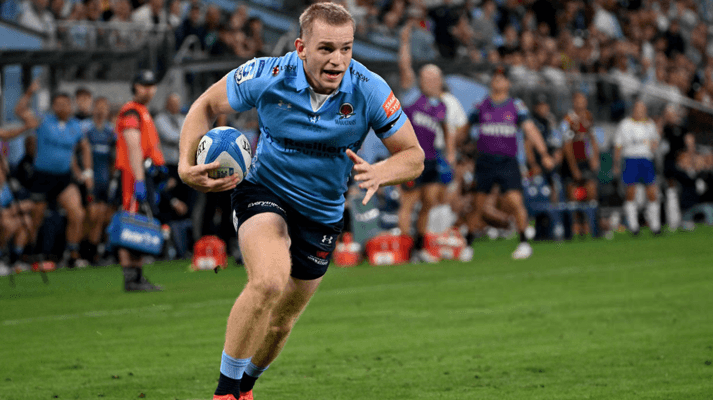
The 2026 Super Rugby Pacific season ignited with a weekend of high-octane drama and significant early-season statements. The ACT Brumbies currently occupy the top of the ladder following a clinical 56–24 demolition of the Western Force in Perth, while the NSW Waratahs signalled a resurgence with a dominant 36–12 victory over the Reds in Sydney.?
In New Zealand, the Highlanders provided the round's biggest upset, toppling the defending champion Crusaders 25–23 thanks to a clutch 78th-minute penalty from Cameron Millar. Individual brilliance was headlined by Moana Pasifika captain Miracle Faiilagi, who netted a hat-trick in a historic away win against the Fijian Drua, and Max Jorgensen, whose electric double for the Waratahs earned him maximum Player of the Year votes alongside Faiilagi.
Not to be outshone, the Brumbies' Charlie Cale delivered a monster performance with 23 tackles and two tries, setting a high bar for the loose forwards as we head into Round 2.


The 2026 season is officially in overdrive, and for the Hurricanes, the wait has been about as agonising as a slow-motion TMO review. While the rest of the competition spent Round 1 battering each other into the turf, the Wellington men were forced to watch from the sofa, but they will finally rejoin the fray this Friday at Sky Stadium. They’ll be welcoming a Moana Pasifika side that is currently walking on air after a 40–26 clinical dismantling of the Fijian Drua.
Moana arrives in the capital having turned their 2025 "penalty-machine" reputation on its head, conceding a league-low four penalties in the opening round; roughly half of what the next most disciplined team managed. The "Cake Tin" has historically been a house of horrors for the visitors; the Hurricanes have won all four home encounters in this fixture, averaging a staggering 55 points per game and often leaving the Moana defence looking like a structural failure in a gale.
That said, if there’s a moment for an upset, it’s the season opener. Despite their dominance, the Hurricanes have a bizarre psychological block when starting at home, winning their first game of the season in Wellington only once in eight attempts; a stat stretching back to the turn of the millennium. They’ll be leaning heavily on Ruben Love to break that hoodoo, a man who has been directly involved in five tries across his last five outings, though Moana will be banking on the fact that he’s only managed to find the chalk once in his two previous meetings against them.
The real surgical threat, however, wears Moana colours. Miracle Faiilagi is currently playing a version of rugby that shouldn't be legal, fresh off a Round 1 hat-trick and leading all forwards with five defenders beaten. With 11 tries in his last 11 games, Faiilagi doesn't just find space; he creates it out of thin air. If the Hurricanes can't find a way to contain him and if Semisi Tupou Ta'eiloa continues his try-scoring streak, then the Canes could be in for a tough night at home.


We roll into week two of the 2026 campaign with the optimism around the Australian franchises still largely intact. This is the awkward second sprint of the season, though the point where bright ideas usually meet cold reality, and Allianz Stadium is exactly the sort of venue where structural flaws tend to get exposed.
The Waratahs return home riding the high of a 36–12 dismantling of the Queensland Reds. They racked up 600-plus metres with ball in hand and cracked triple figures in carries, owning both territory and tempo for long stretches. Their pack set the tone at scrum-time, their discipline held together, and that platform gave “boy wonder” Max Jorgensen license to turn numbers into damage with a brace of tries and a 50–22 that felt almost casual in its execution. For a side that has worn the “promising but flaky” tag for too long, it was the sort of mature, low-drama performance coaches replay on Monday with a smile.
The Drua arrive from the opposite emotional postcode. A 40–26 loss to Moana Pasifika in Lautoka was jarringly flat by their standards: 21–0 down inside 17 minutes, chasing the game, and repeatedly sabotaging their own surges with penalties and a costly yellow to Mesake Vocevoce. The return of Virimi Vakatawa gave them a headline, but not the control they needed. Now they leave the warmth of home for a travel-heavy second week, and history is merciless here; the Drua’s away record remains a running joke only if you don’t have to coach them through it, with defeat following them almost every time they clear Fijian airspace. They have turned NSW over in two of the last three meetings, but never on Australian soil, and their last visit to Moore Park was decided by a single-score margin that still stings in Sydney.
The tactical question is brutally simple: can the Drua stay connected in defence for long enough to stop Jorgensen turning half-chances into scoreboard events? The young fullback is already trending towards two try involvements a game against this opposition, and he now operates behind a side that looks far more comfortable doing the boring things well.
The Drua will lean heavily on the motor of Elia Canakaivata, who topped the competition in Round 1 for carries and metres and is exactly the sort of hard-running rhythm-setter they need to bend the line repeatedly. But against a Waratahs outfit that converted the bulk of their attacking entries last week and looked genuinely aligned around a territory-first game, another spate of soft penalties or defensive walkabouts will be fatal. If NSW reproduce anything close to their Round 1 set-piece control and kicking discipline, back-to-back home wins and a top-four position beckon.


After a Round 1 that saw the Highlanders drag the Crusaders into a trench fight and walk out 25–23 winners, Forsyth Barr now hosts a derby that feels like a reality check as much as a rivalry game. A second straight win to open the campaign would be their first since 2021 and, just as significantly, back-to-back New Zealand derby victories for the first time since 2018—a small sentence that underlines how rare this sort of momentum has been in Dunedin. The problem is that their reward for finally bloodying a local heavyweight is a Chiefs side that has turned this fixture into a habit; seven wins on the bounce against the Highlanders, 40 points in each of the last two, and one more victory away from the longest streak either team has ever put together in this matchup.
The Highlanders come in with numbers that back up the eye test from Round 1. They won nine turnovers and conceded only 10 penalties, the sort of discipline and breakdown sharpness that has been missing from too many of their New Zealand derbies in recent years. Even so, the broader context is unforgiving: just three wins from their last 30 games against Kiwi opposition, and only one victory in their last six home clashes with the Chiefs, with Forsyth Barr delivering more scar tissue than sanctuary in this rivalry since 2020.
The Chiefs, by contrast, arrive with the sort of steady, grown-up away form you associate with a team that expects to play deep into finals. They have taken three of their last four on the road, including a 19–15 arm-wrestle against the Blues at Eden Park in Round 1, and have won seven of their last eight New Zealand derbies in the regular season. Their recent ledger against the Highlanders is brutal reading in Dunedin: 41–24 and 46–10 last season, 52–28 at Forsyth Barr the year before, and a run of scorelines that show not just victory but offensive separation on the scoreboard. When you add in the head-to-head totals, 25 wins to 17 overall in favour of the Chiefs, with a 12–8 edge in Dunedin, you can see why most of the pressure still sits on the hosts despite their Round 1 heroics.
The Highlanders have the opportunity to redraw the map of their season right here: a second win, another New Zealand scalp, and confirmation that their raised defensive standards and improved exit work are the new baseline rather than a one-off. The Chiefs, though, remain the benchmark in this matchup, bringing a seven-game streak and a recent derby record that suggests they know exactly how to suffocate local challengers when it matters.


Perth gets the Sunday slot, but there’s nothing gentle about what’s coming over the horizon for the Western Force. After a Round 1 beating at home from the Brumbies, they now host a Blues side that has turned this fixture into a long-running habit of pain: unbeaten in their last 13 clashes with the Force (12 wins, 1 draw), with their only loss to the men from the west all the way back in 2008. The Force have never beaten the Blues in Perth, with the visitors taking five wins and a draw from six trips and holding the home side to fewer than 20 points in five of those games, which puts the burden of proof squarely on a Force outfit already winless in seven straight Super Rugby Pacific matches.
The Force’s 56–24 loss to the Brumbies laid bare both their ambition and their fragility. They scored three tries and moved the ball plenty, but finished Round 1 ranked last for gainline success, crossing it on just 55 of those carries. Defensively, they were asked to make almost 200 tackles and missed 24. This is a team that hasn’t won at home in four games (three losses, one draw) and averages just 17 points per outing across their seven-game winless run, even if their last Super Rugby win did come at HBF Park against Kiwi opposition in the form of the Highlanders in 2025.
The Blues, for their part, arrive off a 19–15 opening-round defeat to the Chiefs at home that will sting less for the result and more for the opportunities lost. They scored two tries, missed half their shots at goal to sit at 50% from the tee, and conceded 12 penalties. Their recent history against Australian sides is imposing, 25 wins from their last 28 games, including their last two by a combined 86–25.
If the Force are to drag this into an arm-wrestle, their core men have to double down. Carlo Tizzano continues to be their most reliable source of scoreboard threat, with 15 tries in his last 13 Super Rugby outings and another five-pointer in Round 1 to extend a run of tries in three straight games,AC and he also crossed the last time he faced the Blues in 2025.?
On paper, this looks like one of the more lopsided fixtures of the round, and the history does little to suggest otherwise. The Force will lean hard on home conditions, their high-possession attacking philosophy and the work-rate of Tizzano, Ekuasi and Grealy to try and drag the Blues into a messier, slower contest, while hoping their scrum and gainline numbers trend sharply upward from last week.
The Blues, though, arrive with the more reliable set-piece, a far more consistent record against Australian opponents, and a backline that can turn half-chances into seven-pointers from anywhere; if they reproduce their Round 1 collision dominance and tidy up their discipline and goal-kicking, the weight of history suggests Perth may be hosting another long afternoon rather than an upset.


Christchurch gets the heavyweight billing this week, and the script feels familiar. The Crusaders at home against the ACT Brumbies, two of Super Rugby’s great repeat offenders when it comes to winning games and scoring points. The Crusaders have taken 13 of the last 14 meetings between these sides and are on a 12-game streak against the Brumbies in New Zealand, having not lost to them at home since a 12–17 result back in 2000, but the margins have tightened, 31 points conceded in each of the last two clashes and five of their last six games decided by seven points or fewer.
The Brumbies arrive as the form side of Round 1 after a 56–24 dismantling of the Western Force, riding a four-game regular-season away winning streak where they have leaked just 16 points per outing and have shown a growing habit of coming from behind on the road.?
The Crusaders opened 2026 with a jolt, falling 25–23 to the Highlanders in Dunedin after leading at half-time, a result that underlined both their threat and their vulnerability. The Brumbies, by contrast, looked as if they’d been in-season for a month already. Their eight-try, 56-point outing in Perth delivered the most tries and points of Round 1.
This isn’t the old “Crusaders by how many” fixture anymore; it feels much closer to a coin flip wrapped in two decades of history and muscle memory. The Crusaders’ dominance in the rivalry, their home record and the presence of Jordan, Reece and Fainga’anuku mean they remain favourites on paper, and their ability to generate double-digit line breaks even in defeat speaks to a ceiling few can match.
The Brumbies, though, arrive in rare balance: an eight-try attack, the competition’s best defensive metrics in Round 1, a lineout that hums, and a back row that can go toe-to-toe with anyone, all backed by a four-game away winning streak and a proven habit of finishing strong on the road.
| # | Team | PL | W | L | D | PD | BP | PTS |
|---|---|---|---|---|---|---|---|---|
| 1 |  Brumbies Brumbies | 1 | 1 | 0 | 0 | 32 | 1 | 05 |
| 2 |  Waratahs Waratahs | 1 | 1 | 0 | 0 | 24 | 1 | 05 |
| 3 |  Moana Pasifika Moana Pasifika | 1 | 1 | 0 | 0 | 14 | 0 | 04 |
| 4 |  Chiefs Chiefs | 1 | 1 | 0 | 0 | 4 | 0 | 04 |
| 5 |  Highlanders Highlanders | 1 | 1 | 0 | 0 | 2 | 0 | 04 |
| 6 |  Crusaders Crusaders | 1 | 0 | 1 | 0 | -2 | 1 | 01 |
| 7 |  Blues Blues | 1 | 0 | 1 | 0 | -4 | 1 | 01 |
| 8 |  Hurricanes Hurricanes | 0 | 0 | 0 | 0 | 0 | 0 | 00 |
| 9 |  Fijian Drua Fijian Drua | 1 | 0 | 1 | 0 | -14 | 0 | 00 |
| 10 |  Queensland Reds Queensland Reds | 1 | 0 | 1 | 0 | -24 | 0 | 00 |
| 11 |  Western Force Western Force | 1 | 0 | 1 | 0 | -32 | 0 | 00 |