Advertisement



P. Lakai (11'), T. Vaa'i (15'), C. Roigard (48'), C. Taylor (54'), L. Carter (65'), J. Moorby (72'), W. Jordan (79')
Tries
T. Wright (7'), H. Wilson (36'), J. Nasser (75')
D. McKenzie (12', 16', 49', 54', 66', 80')
Conversions
R. Lonergan (7', 37')
D. McKenzie (32')
Penalties
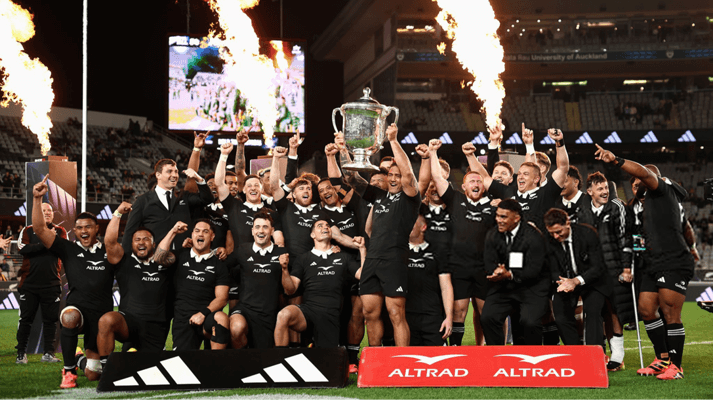
The Wallabies arrived at Eden Park on a six-match unbeaten run, a new-found confidence under Les Kiss and genuine belief that this might finally be their year to end the Bledisloe Cup drought. For 40 minutes, there was reason to believe them. Unfortunately for Australia, rugby matches tend to last 80. The All Blacks produced a ruthless second-half performance to turn a competitive contest into a 50-19 demolition, retaining the Bledisloe Cup for a 24th consecutive year and extending their remarkable unbeaten run at Eden Park to 54 Tests. It was also a much-needed response from Dave Rennie's side, who had endured three consecutive defeats against South Africa and arrived with plenty of questions hanging over them. By full-time, they had answered quite a few.
Australia actually made the brighter start, with Max Jorgensen creating the space for Tom Wright to open the scoring inside ten minutes. The Wallabies looked dangerous with ball in hand and weren't afraid to challenge New Zealand's defence, but the hosts gradually began to impose themselves through their forwards. Converted tries from Peter Lakai and Tupou Vaa'i, followed by a Damian McKenzie penalty, gave New Zealand a 17-7 lead. Harry Wilson's converted try then brought Australia back within three points at half-time. Given the Wallabies' recent victory over the Springboks and their growing confidence under Kiss, there was every reason to expect a proper contest after the break. Instead, New Zealand shifted through the gears and Australia simply couldn't follow.
The decisive period came early in the second half. Australia threatened early in the second half but conceded an obstruction penalty from an attacking lineout. Cam Roigard's try soon afterwards restored New Zealand's ten-point lead. From there, the All Blacks were relentless. Damian McKenzie controlled proceedings brilliantly at fly-half, combining his attacking instincts with clever game management, while the forwards repeatedly provided quick ball for a backline that suddenly looked full of confidence. Codie Taylor, Leroy Carter and Josh Moorby all crossed as New Zealand took the game away from the visitors, before Will Jordan completed the rout with the final play. Australia's only response after the interval came through Josh Nasser, by which stage the result was long beyond doubt. The contrast between the two sides was striking: New Zealand became sharper and more aggressive as the match progressed, while Australia's accuracy and decision-making deteriorated.
For the Wallabies, this was a particularly sobering result given the progress they had appeared to make in recent months. Their victory over South Africa had raised expectations, and there were genuine signs during the opening half that they could trouble New Zealand. But international rugby is unforgiving when opportunities go begging, and Australia's inability to consistently compete in the aerial contest, manage territory and control momentum proved costly. Losing Len Ikitau after a failed head injury assessment disrupted Australia's midfield, but their problems extended beyond that enforced change. Kiss will know that his side cannot afford another collapse of this magnitude, particularly with a home Rugby World Cup approaching in 2027.
For New Zealand, meanwhile, the result was about considerably more than another Bledisloe Cup triumph. After the criticism that followed their defeats to the Springboks, Rennie needed a performance that demonstrated his side still possessed the physicality, attacking threat and composure expected of an All Blacks team. They delivered all three. McKenzie looked increasingly comfortable directing the attack, Roigard provided the tempo, and the forward pack gave Australia very little room to breathe once the contest opened up. The Wallabies have a chance to respond at Accor Stadium in Sydney on Saturday, 17 October, although New Zealand have already retained the Bledisloe Cup. After all the talk of an Australian resurgence, the All Blacks offered a fairly emphatic reminder that closing the gap and actually beating them are two very different things.