Advertisement

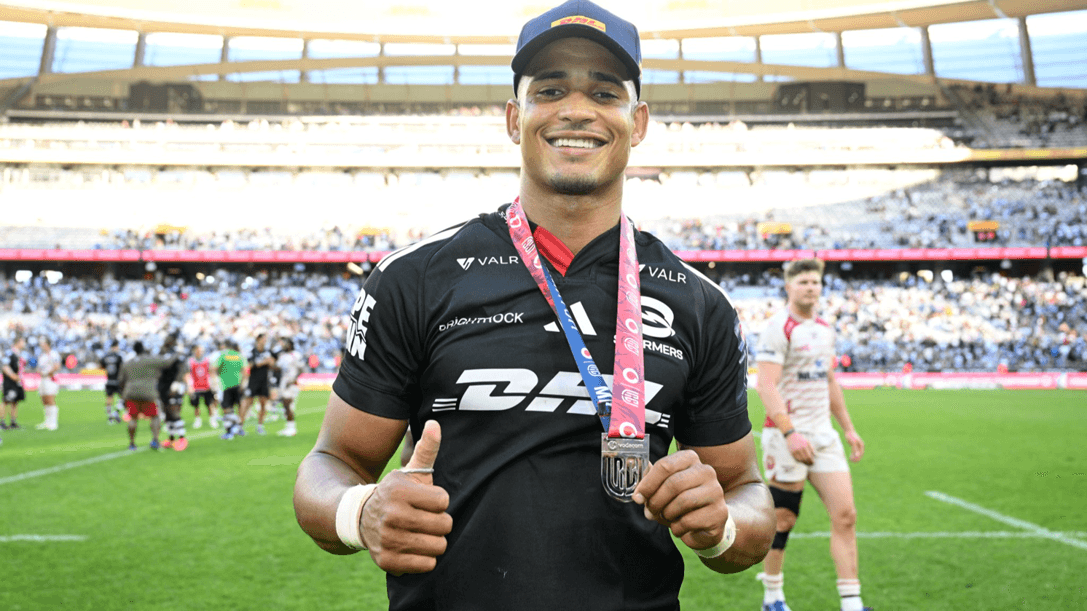
The United Rugby Championship delivered another weekend of drama, with the Bulls and Stormers flexing their muscles in South Africa, Edinburgh continuing their perfect start and Leinster finally getting off the mark. Elsewhere, Munster somehow let a 21-point half-time lead slip in Belfast, while the Scarlets and Ospreys gave Welsh rugby supporters something to smile about.


G. Hiddleston (20', 40'), R. Darge (33'), J. McKay (43'), S. Stephen (65')
Tries
S. Jansen (15'), J. Ioane (47', 59')
G. Horne (34', 40', 44', 66')
Conversions
C. Frawley (16', 48')
D. Lancaster (80')
Penalties
Glasgow might be better known for their attacking rugby, but it was their forwards who did the damage against Connacht at Scotstoun. Franco Smith's side continued their unbeaten start to the season with a bonus-point victory built largely around a rolling maul that Connacht simply couldn't handle. Four of Glasgow's five tries came through that route, with Gregor Hiddleston grabbing a double as the Warriors repeatedly punished the visitors' discipline. Stuart Lancaster will be particularly frustrated by the manner of the defeat, with Connacht conceding 18 penalties and picking up two yellow cards. That's now 43 penalties in their opening three matches, a worrying trend for Lancaster's side as he begins his second season in charge. There was also the interesting subplot of Lancaster coming up against his son Dan, who was playing at fly-half for Glasgow. Connacht had their moments and showed enough with ball in hand to suggest there's something to work with, but giving a side like Glasgow that many opportunities inside your own 22 is asking for trouble. The Warriors have now collected two wins and a draw from their opening three fixtures, and while there is plenty of attractive rugby in their armoury, this was a reminder that they can win games the old-fashioned way too.


E. Dee (5', 50'), Penalty Try (40'), A. Tuitavuki (56')
Tries
R. Moriarty (17'), K. Giles (35'), S. Parry (46', 54'), M. Morris (72', 79')
de Beer (6', 51', 57')
Conversions
D. Edwards (18', 47', 55', 80')
A. O'Brien (80')
Penalties
If anyone needed reminding that Welsh derbies rarely follow a script, Rodney Parade provided a fairly convincing argument. The Dragons came into the game with some much-needed confidence following their victory over the Scarlets, while the Ospreys were still searching for their first win of the campaign after a difficult opening fortnight. What followed was an entertaining, chaotic contest in which neither side looked particularly interested in making life easy for themselves. Elliot Dee was excellent for the hosts, crossing twice as the Dragons repeatedly found joy close to the Ospreys line, but it was the visitors' ability to respond that ultimately made the difference. Former Dragon Ross Moriarty was among the scorers against his old club, while Morgan Morris proved decisive with two late tries that finally swung the contest in the Ospreys' favour. Dan Edwards also played an important role in keeping the scoreboard moving as the lead changed hands repeatedly. The Dragons will feel they had enough opportunities to win, particularly after battling their way back into the contest during the second half, but their inability to close things out proved costly. For the Ospreys, this was a badly needed result after two defeats, and one achieved with the sort of resilience that had been missing from their opening performances. Both teams took something from the evening, but the visitors left with the win and a welcome injection of confidence.


H. Vorster (9'), J. Grobbelaar (25'), C. Hanekom (29', 34'), J. Rudolph (39'), C. Moodie (43'), van Heerden (67'), C. Jooste (73'), de Klerk (79')
Tries
S. Qoma (17'), M. Brandon (49')
C. Bosch (25', 29', 40'), H. Pollard (68', 74', 80')
Conversions
C. Smith (18')
Penalties
C. Smith (32')
The Bulls arrived at Loftus looking to respond to last weekend's narrow defeat in Munster, and the Lions unfortunately found themselves on the receiving end of that frustration. What had initially looked like a competitive Gauteng derby quickly turned into a one-sided affair as Johan Ackermann's side ran in nine tries and completely overwhelmed their neighbours. The Lions briefly took the lead through Sibabalo Qoma and looked capable of making a contest of it during the opening exchanges, but Morné van den Berg's yellow card for a deliberate knock-on proved a significant turning point. From there, the Bulls took control, with their forwards winning the collisions and creating the platform for an increasingly dangerous backline. Cameron Hanekom was particularly impressive, scoring twice in the opening half and reminding everyone exactly why he's considered such an exciting prospect. The Bulls were devastating when opportunities presented themselves, running in four tries during the final 15 minutes of the first half before finishing just as strongly after the break. The Lions weren't without attacking ambition, but they simply couldn't live with the physicality or accuracy of the hosts. For a Bulls side that has come agonisingly close to URC glory on several occasions, this was the kind of performance supporters will want to see consistently. For the Lions, conceding 57 points in a derby is a fairly uncomfortable afternoon, however you dress it up.


S. Senatla (6'), H. Dayimani (36', 47'), A. Venter (40'), L. Zas (41'), J. Kotze (63')
Tries
E. Tshituka (15'), M. Romao (51'), P. Buthelezi (57')
S. Feinberg-Mngomezulu (37', 40', 48')
Conversions
G. Lombard (52', 58')
S. Feinberg-Mngomezulu (13')
Penalties
G. Lombard (30')
There was plenty of anticipation around the South African coastal derby, particularly with both sides looking to build on encouraging starts to the campaign, but it was the Stormers who emerged looking like the more complete outfit. The Sharks arrived in Cape Town having beaten the defending champions Leinster the previous weekend, yet they struggled to match the home side's intensity once the Stormers began taking control of the forward exchanges. The scrum became an increasingly important weapon for John Dobson's men, providing the platform for a backline that looked dangerous whenever it found space. Sacha Feinberg-Mngomezulu was outstanding, producing the sort of commanding performance that reminds everyone of his enormous ceiling. Hacjivah Dayimani added two tries, while Seabelo Senatla, Leolin Zas, Andre-Hugo Venter and JJ Kotze also crossed as the Stormers repeatedly exposed weaknesses in the Sharks' defence. The visitors had their moments through the likes of Manu Tshituka and Phepsi Buthelezi, but they were largely reacting to the Stormers rather than dictating the contest themselves. After suffering their first defeat of the season in Edinburgh last weekend, this was an excellent response from the Cape Town side. The Sharks, meanwhile, have now experienced both sides of South African rugby's brutal competitiveness in the space of seven days, beating Leinster one week before being comfortably second best in Cape Town the next.


A. Fusco (11'), G. Ferrari (71')
Tries
M. Currie (29'), F. Douglas (36'), M. Bradbury (55'), E. Ashman (79')
T. Allan (72')
Conversions
J. Grayson (29', 55', 80')
Penalties
J. Grayson (5')
Three games, three wins, and Edinburgh suddenly find themselves setting the early pace in the URC. Sean Everitt's side travelled to Parma looking to maintain their perfect record against a Zebre team that has caused them problems in recent seasons, and while this wasn't always a particularly polished performance, Edinburgh showed the control and patience required to get the job done. James Grayson's early penalty put Edinburgh ahead before Malelili Satala's yellow card gave Zebre an opening, with Alessandro Fusco scoring the game's first try. The visitors then gradually imposed themselves through their forwards, with Magnus Bradbury, Freddy Douglas and Liam McConnell all influential. Matt Currie helped put Edinburgh in front before Douglas and Bradbury extended their advantage, although Zebre remained competitive enough to prevent the visitors from completely relaxing. Edinburgh had to wait until the closing moments to secure their try bonus point, with the decisive fourth score coming from a late driving maul finished by Tom Currie. It was a fitting conclusion to a game largely won through forward pressure and territory rather than spectacular attacking rugby. Edinburgh have now won their opening three league matches for the first time since 2015–16, and although the fixture list has been reasonably favourable, winning three consecutive matches is something they haven't managed often enough in recent seasons. The real challenge will be maintaining that momentum when the opposition gets tougher.


S. Lousi (3'), B. Murray (52'), E. Mee (55', 65')
Tries
S. Maile (9'), O. Ratave (23'), M. Lamaro (37'), L. Lynagh (71')
S. Costelow (4', 53')
Conversions
J. Umaga (10', 23', 38')
S. Costelow (77')
Penalties
For much of the afternoon, it looked like Wayne Pivac was going to enjoy a successful return to Llanelli. Instead, his Benetton side managed to let a 14-point half-time lead slip as the Scarlets produced a remarkable comeback to claim their first victory of the campaign. The Italians had looked comfortably the better side in the opening 40 minutes, with tries from Siua Maile, Onisi Ratave and Michele Lamaro putting them 21-7 ahead. But the introduction of fresh legs after the break transformed the contest, with Fletcher Anderson and Gareth Davies helping inject some urgency into the Scarlets' performance. Blair Murray was outstanding, grabbing an interception try, while Ellis Mee crossed twice as the home side turned the game on its head. Benetton briefly appeared to have rescued the result when Louis Lynagh scored late on, only for Sam Costelow to step up and land a nerveless long-range penalty in the closing minutes. The win was particularly significant for a Scarlets side that had lost their opening two Welsh derbies and desperately needed something positive to build around. For Benetton, however, the result will be difficult to stomach. They had looked in control for large periods before defensive errors and a loss of composure allowed the Scarlets back into the contest. Benetton left with two bonus points, but will rue letting a five-point win slip away.


J. Stockdale (11', 52'), D. McCann (67'), S. McCloskey (76')
Tries
A. Kendellen (8', 39'), van der Merwe (14'), D. Kelly (31')
J. Murphy (53', 68', 77')
Conversions
J. Hanrahan (15', 31', 40')
Munster supporters might want to look away, because quite how their side managed to leave Belfast without a victory is going to take some explaining. Clayton McMillan's men were 26-5 ahead at half-time, having completely dominated an Ulster team that looked second best in just about every department. Two tries from Alex Kendellen, alongside scores from Marnus van der Merwe and Dan Kelly, had secured the bonus point before the break, and at that stage the only real question appeared to be how many Munster would win by. Then everything changed. Ulster gradually worked their way back into the contest, with Jacob Stockdale producing a superb performance on his 150th appearance for the province and scoring twice across the match. David McCann added another before Stuart McCloskey completed the comeback late on, with Jack Murphy holding his nerve to convert and level the scores. Munster failed to score a single point after the interval, with costly lineout losses helping Ulster regain momentum. Despite conceding just five penalties to Ulster's 17, the visitors could not retain control of a match they had dominated. Ulster deserve enormous credit for their resilience, particularly after their own difficult opening half, but this was a spectacular collapse from the visitors. Both sides remain searching for consistency, and while Ulster will take enormous encouragement from the character they showed, Munster have some serious questions to answer about their ability to manage games.


H. Keenan (8'), J. O'Brien (16', 36'), J. Conan (18'), J. Osborne (75')
Tries
M. Grady (23')
S. Prendergast (38', 76')
Conversions
After two defeats in South Africa, Leinster finally returned home, reopened their redeveloped RDS and reminded everyone that they remain a rather formidable proposition in Dublin. The defending champions welcomed Cardiff to the newly named Laya Arena and wasted little time getting themselves back on track, running in four first-half tries to secure the bonus point before the interval. Sam Prendergast was excellent in the opening exchanges, showing real confidence with ball in hand and helping create opportunities for a dangerous backline. Hugo Keenan opened the scoring by chasing down his own grubber kick, while Jimmy O'Brien crossed twice and Jack Conan added another as Leinster raced into a commanding lead. Cardiff, who had won their opening two matches, were dealt an early blow when Aled Davies was sent to the sin bin, although they did produce moments of quality through Mason Grady and showed considerably more resistance after the break. In fact, Leinster's performance became increasingly disjointed during the second half, with handling errors and lineout problems preventing them from building on their early dominance. Jamie Osborne eventually added a fifth try, but Leo Cullen was understandably reluctant to get carried away afterwards. Leinster will be delighted to have their first win secured, particularly in front of more than 20,000 supporters at their refurbished home, but this was hardly a flawless performance. For Cardiff, the result was a reminder of the gap that still exists between competing with the URC's strongest teams and consistently beating them.
Three rounds into the new URC season and the early picture is beginning to take shape, although there are already enough contradictions to make predictions fairly dangerous. Edinburgh are the only side with three wins from three, and while bigger tests await, Sean Everitt deserves credit for turning a team that struggled for consistency last season into one that is finding ways to win. Glasgow remain unbeaten and look increasingly comfortable winning games through different approaches, while the Bulls and Stormers delivered the weekend's most convincing performances. The South African sides continue to look formidable at home, and neither will be particularly interested in surrendering that advantage as the season develops. Leinster finally getting off the mark will relieve some pressure in Dublin, but two defeats from their opening three games is hardly the start the defending champions had in mind. Elsewhere, Munster's collapse in Belfast was arguably the weekend's most concerning performance given the position they had put themselves in, while both the Scarlets and Ospreys will be relieved to have picked up their first victories. For Welsh rugby, there were encouraging signs, even if Cardiff's defeat in Dublin offered a reminder that progress is rarely straightforward. With European competition next on the calendar, the URC takes a short break having already provided plenty of talking points. And if the opening three rounds are anything to go by, there won't be many straightforward weekends ahead.