Advertisement

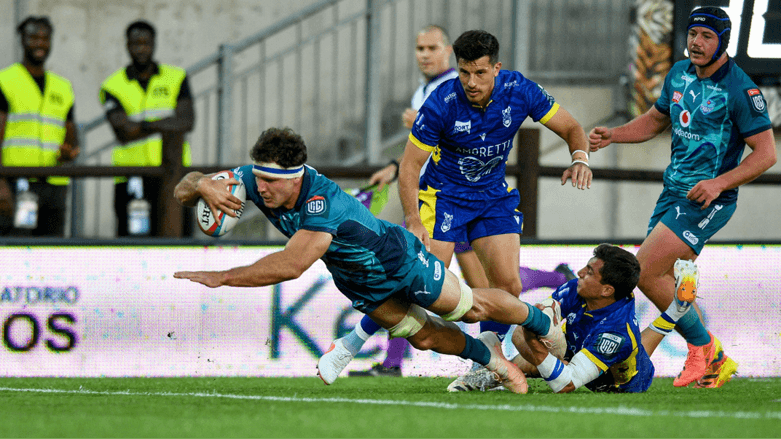
All four South African sides opened with victories, Glasgow and Edinburgh won on Irish soil, and Cardiff took the Welsh derby as the 2026/27 United Rugby Championship returned with comeback wins, narrow escapes and plenty to unpack.
Opening weekends rarely provide definitive answers, but they can quickly challenge expectations. Leinster, Munster, Ulster and Connacht all finished the first round without a win, although their defeats told very different stories. Elsewhere, the Bulls delivered the biggest winning margin, the Sharks gave their supporters plenty of attacking encouragement, and the Dragons came within the width of a post of winning in Treviso.


E. Cronje (8', 23'), K. Mpeku (78')
Tries
F. Gunne (5', 13', 38'), S. Smyth (84')
C. Smith (8', 24', 79')
Conversions
C. Gabriel (14', 39'), H. Byrne (84')
C. Smith (12', 60')
Penalties
The Lions beat the defending champions, but this was a result to appreciate rather than a performance to get carried away with. Erich Cronje scored twice, providing the sharpness that kept the hosts competitive while Leinster enjoyed extended possession. Fintan Gunne was outstanding for the visitors, completing a first-half hat-trick as Leinster repeatedly found openings around the Lions’ defence and took a 19–17 lead into the interval.
Chris Smith’s second penalty restored the Lions’ advantage before Kelly Mpeku’s late try, converted by Smith, made it 27–19. That extra distance proved essential: Stephen Smyth’s late response earned Leinster both a four-try bonus point and a losing bonus point. Smith finished with a perfect record from five attempts at goal, a less spectacular but decisive contribution alongside Cronje’s finishing. The Lions will welcome the victory, but their difficulty escaping pressure remains a concern. Leinster, meanwhile, had enough attacking quality to make this more than a respectable defeat; they will feel there was a win available.


M. Hansen (37'), J. Ioane (40+1')
Tries
W. Gelant (19'), S. Sandi (56'), V. Paulo (77'), E. Ngobeni (79')
S. Gilbert (38')
Conversions
J. Matthee (20', 57'), Y. Ahmed (80')
S. Gilbert (51')
Penalties
J. Matthee (8')
The Stormers’ bonus-point victory was considerably harder-earned than the final margin suggests. Warrick Gelant finished Andre Warner’s grubber to help establish a 10–0 advantage, but Connacht responded through Mack Hansen and Josh Ioane to lead 12–10 at half-time. A Sam Gilbert penalty extended that advantage after the break, leaving the visitors with work to do rather than an obvious route to five points.
The difference came from the replacements. Sazi Sandi crossed after a powerful maul to put the Stormers 17–15 ahead, before debutants Vernon Paulo and Ezekiel Ngobeni scored in the final five minutes. Three replacement try-scorers told the story of a bench that changed the match rather than simply maintained its tempo. For Connacht, the frustration is that a competitive position became a defeat without even a losing bonus point. For the Stormers, this was a useful demonstration that they could recover control and finish strongly away from home.


N. Hatton (11'), M. Tshituka (21'), L. Giliomee (27', 66'), L. Bester (36')
Tries
L. Morgan (31'), S. Parry (40+4'), L. Wright (44'), I. Hopkins (70')
V. Moyo (12', 22', 28', 37'), S. Masuku (67')
Conversions
L. Creighton (31', 40+5')
V. Moyo (52', 55')
Penalties
The Sharks’ attacking connections were the most encouraging part of their five-try victory in Durban. Nick Hatton and Manu Tshituka finished well-supported moves, while Jurenzo Julius helped create the opportunities that allowed Luan Giliomee to show his running threat. Giliomee’s first try, a weaving run from around halfway, contributed to a 21–0 lead. Litelihle Bester then secured the bonus-point try before half-time, with the Sharks leading 28–14 at the break.
Ospreys made the second half more awkward than that opening suggested, reducing the deficit to 28–19. Vusi Moyo’s response mattered: two long-range penalties restored breathing space before Giliomee’s second try settled the contest. The full-back took the player-of-the-match award, but Moyo’s willingness to keep accumulating points was equally important when the visitors threatened a recovery. Ospreys eventually earned a four-try bonus point, giving them something tangible from a difficult afternoon. That also leaves the Sharks with a clear qualification to an encouraging start: their attack was productive, but conceding four tries should keep the review balanced.


A. Fusco (57')
Tries
Penalty Try (25'), R. Ludwig (30'), de Wet (37'), R. Vermaak (42'), H. Vorster (50'), H. Kunene (77'), Z. Burger (82')
T. Allan (58')
Conversions
C. Bosch (31', 38', 42', 51'), le Roux (78')
T. Allan (13', 29')
Penalties
The Bulls produced the round’s most comfortable victory without delivering its most polished performance. Zebre led through Tommaso Allan’s boot before a penalty try and Matteo Canali’s yellow card shifted the contest. Reinhardt Ludwig and Paul de Wet then scored before the interval, turning a slow start into a 21–6 half-time advantage. Ruan Vermaak and Harold Vorster extended the lead early in the second half, effectively removing any uncertainty about the outcome.
Alessandro Fusco supplied Zebre’s only try, while Ludwig’s second and a late Zak Burger score completed the Bulls’ seven-try return, including the penalty try. De Wet was named player of the match, and the visitors had contributors throughout the side. Yet handling errors and wasted opportunities prevented an even more emphatic result. The positive for the Bulls is that their control survived those inaccuracies. The warning is that against stronger resistance, the chances they failed to finish will matter much more. Zebre, meanwhile, could not sustain their early competitiveness once the visitors began converting pressure into tries.


B. O'Connor (13'), M. Milne (35')
Tries
J. Dobie (30', 75'), N. McBeth (50'), G. Horne (66')
J. Hanrahan (14', 36')
Conversions
G. Horne (31', 51', 67')
J. Hanrahan (3', 57')
Penalties
Glasgow’s victory at Thomond Park was built through sustained pressure rather than one sudden burst. Munster had started positively, with JJ Hanrahan’s kicking helping create the platform for Ben O’Connor’s opening try. Michael Milne’s close-range finish then restored a ten-point cushion after Jamie Dobie’s first score, sending the hosts into half-time 17–7 ahead. Munster had earned their position, although an earlier attacking lineout had gone badly wrong while Glasgow were down to 14.
The second half became a different examination. Nathan McBeth’s try rewarded another extended Glasgow spell near the line, before George Horne crossed and converted to put the visitors ahead with 12 minutes remaining. Dobie’s second try secured the four-try bonus point and a 26–20 win. Glasgow outscored Munster 19–3 after the break, showing the value of repeatedly making a defence work. Munster’s losing bonus point offered limited consolation: their first-half attacking promise was not matched by enough second-half possession or scoreboard pressure to protect the lead.


M. Lowry (25'), Z. Ward (56'), D. McCann (61'), K. Knox (63')
Tries
F. Douglas (19'), M. Satala-Navlivou (38'), H. Patterson (41'), P. O'Conor (47')
J. Murphy (57', 61', 64')
Conversions
J. Grayson (20', 39', 42', 48')
J. Murphy (74')
Penalties
J. Grayson (23', 27')
Edinburgh’s five-point win in Belfast contained two performances: the attacking display that built a 34–5 lead, and the increasingly uncomfortable effort to protect it. They led 20–5 at half-time before Hector Patterson and Piers O’Conor finished flowing moves early in the second half. James Grayson was central to that attacking rhythm, particularly in the break and exchanges that created O’Conor’s score. At that stage, Edinburgh had produced far more than a narrow winning performance.
Ulster then changed the contest. Zac Ward, David McCann and Keynan Knox scored in a rapid sequence, with Jack Murphy’s conversions bringing the hosts within eight. His subsequent penalty reduced the gap to five and ensured an anxious finish for the visitors. Edinburgh held out, but allowing 24 unanswered points should prevent the attacking positives from obscuring the closing problems. Ulster earned two bonus points and showed what their attack could produce when it connected. Their larger concern is why it took such a substantial deficit to bring that performance out.


J. Roberts (5'), B. Murray (22')
Tries
D. Thomas (17'), T. Basham (37'), E. Lloyd (64')
G. Anscombe (23')
Conversions
C. Sheedy (18', 38'), J. Evans (64')
J. Hawkins (51')
Penalties
Cardiff won the Welsh derby by repeatedly returning to something that worked. All three of their tries originated from close-range attacking lineouts, with Dan Thomas, Taine Basham and replacement hooker Evan Lloyd providing the finishes. Scarlets produced the more eye-catching first-half moments: Sam Lousi’s offload helped Joe Roberts score, while Blair Murray’s solo effort demonstrated his threat in space. Cardiff nevertheless went into half-time 14–12 ahead.
Joe Hawkins briefly restored the Scarlets’ lead with a penalty, but Lloyd’s 65th-minute try and Jarrod Evans’s conversion proved decisive. Basham took the player-of-the-match award in a contest that became increasingly untidy after the break. Cardiff’s achievement was finding a repeatable source of points when neither side was playing fluently. Scarlets had individual quality and enough promising moments, but no second-half try to turn them into a winning performance. That distinction mattered more than which side produced the better highlights.


F. Mey (11'), B. Bernasconi (23'), I. Mendy (39')
Tries
de Beer (26'), F. Inisi (43'), E. Dee (78')
J. Umaga (12', 24')
Conversions
de Beer (27', 44')
The Dragons left Treviso with two points and competing emotions. Recovering from 19–7 down at half-time was encouraging; watching Tinus de Beer’s late conversion strike the post made the missed victory difficult to ignore. Benetton had used their set-piece pressure effectively before the interval, but the visitors tightened up after the break and kept the hosts scoreless throughout the second half.
Fine Inisi’s try brought the Dragons back into contention before Elliot Dee finished a driving maul with two minutes remaining. De Beer’s unsuccessful conversion left the scores level, rather than completing the comeback. Thomas Young’s breakdown work and Anzelo Tuitavuki’s involvement in attack gave the Dragons reasons to value more than the final score. For Benetton, this was a substantial opportunity lost: they had established control and a useful cushion, then added nothing to it. The Dragons’ recovery deserved a reward, even if the final kick left them wondering whether two points were enough.
The temptation after round one is to start rearranging expectations immediately. A more useful assessment is to separate the results from the performances beneath them. Winning did not remove the Lions’ defensive questions, the Bulls’ inaccuracies or Edinburgh’s difficulty closing out their game. Equally, the attacking promise shown by several beaten sides does not erase the periods that cost them. The first weekend supplied plenty of encouragement, but very few teams should mistake it for a finished product.