Advertisement

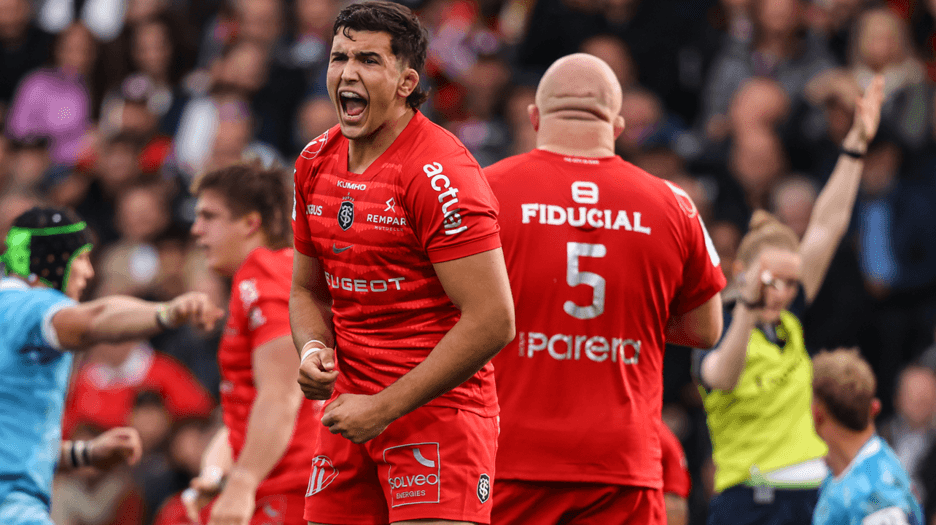
Toulouse survived 65 minutes with 14 men, Pau's young talent dismantled Leicester and Montpellier reminded Bath that European rugby can still be won through the forwards. But with Clermont, Racing and Stade Français beaten and several French clubs struggling in the Challenge Cup, the opening weekend revealed as much about the different pressures facing the Top 14 as it did about its financial and playing strength.
Every autumn, someone inevitably announces that the Top 14 is the strongest league in the world. There is plenty of evidence to support the argument: extraordinary crowds, deep squads, some of the game's biggest names and clubs that can make a trip to France feel like a particularly unpleasant way to spend a weekend. But saying it is easier than proving it, and European rugby is where that claim gets properly tested. France's 14 representatives produced an opening round that was impressive in places, uncomfortable in others and rarely straightforward. Toulouse escaped Exeter, Pau and Montpellier beat English opposition convincingly, and Bordeaux-Bègles had to settle for a draw with Gloucester. Elsewhere, familiar French heavyweights lost badly, while the Challenge Cup showed that a Top 14 badge is no guarantee of either control or ambition. The strength of French rugby isn't really that every club is brilliant. It's that the league creates a remarkable range of high-level teams, often trying to achieve very different things at the same time.
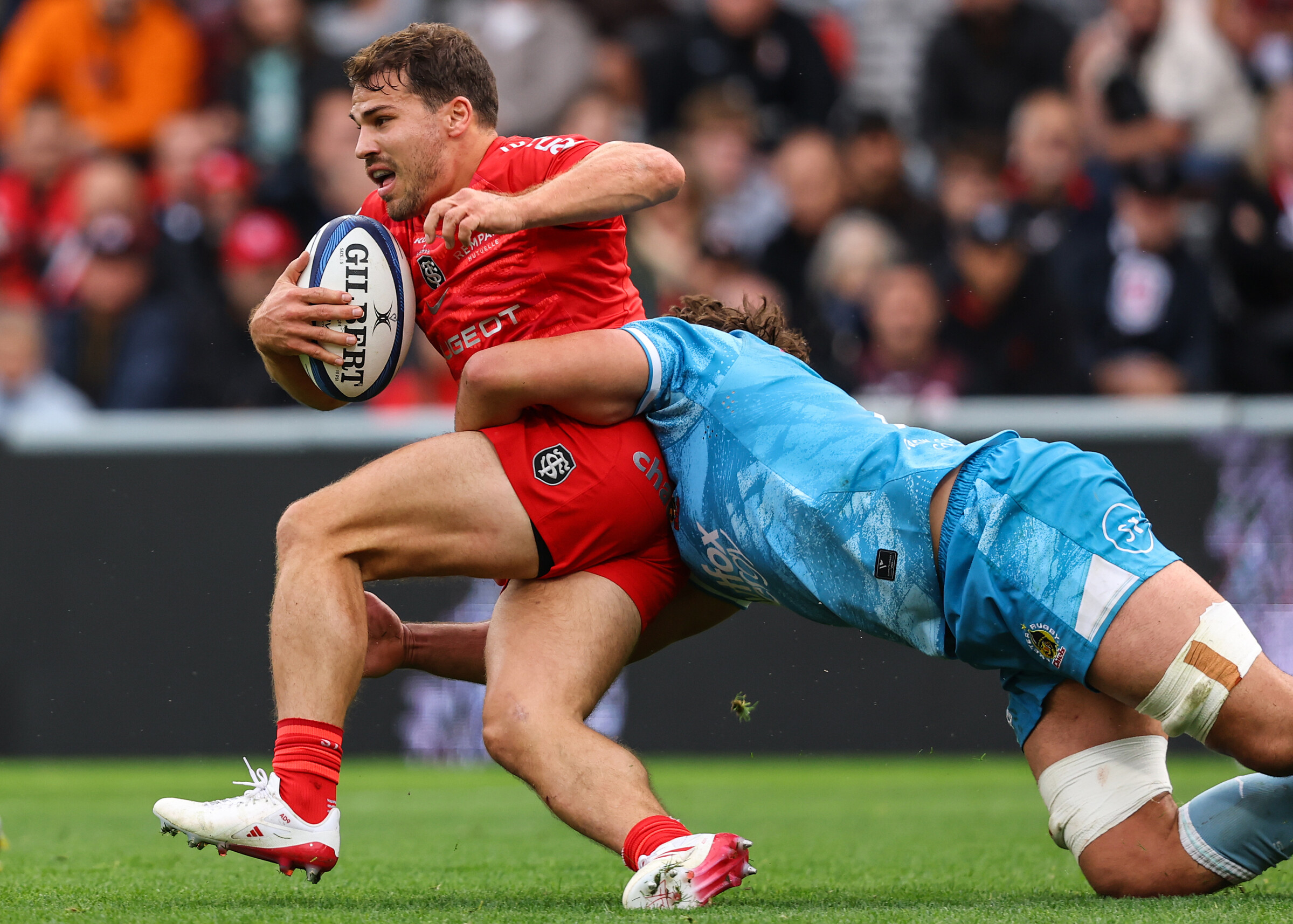
Antoine Dupont tackled by Exeter’s Ethan Roots in Toulouse, 18 October 2026. ©INPHO/Ben Brady.
Toulouse remain the clearest example of what makes the French system so difficult to match. Losing Rodrigue Neti to an early red card should have derailed their meeting with Exeter; instead, Ugo Mola's side spent most of the afternoon playing with 14 and still won 43–40. They were vulnerable and allowed Zack Wimbush to run in a hat-trick, but the quality of their support running and the ability to make attacking decisions under pressure never disappeared. Antoine Dupont and Romain Ntamack are not simply two brilliant French internationals dropped into a good club team. They have been developed inside a structure with a clear idea of how Toulouse want to play, and the side's next generation learns those habits alongside them. That continuity is hard to buy and even harder to manufacture at short notice. Toulouse are not flawless, as Exeter showed, but the expectation that they should find solutions no matter what the game throws at them is now part of the club's identity.
The rise of Pau may be the more interesting story for French rugby's future. Second in the Top 14 after six rounds, they rested and rotated players yet still put 41 points past Leicester, with Portugal international Rodrigo Marta scoring twice and young Fabien Brau-Boirie among the try-scorers. Théo Attissogbe's threat out wide is already well established, while Émilien Gailleton is another important figure in a group producing players capable of contributing to the France conversation. This is the attraction of the French development model when it works well: a club doesn't have to be Toulouse or Bordeaux to develop serious international talent and build an effective team around it. Pau's progress may yet be tested brutally by the demands of a long Top 14 season, but their performances are making the top of the league look less like a private gathering of its usual guests.
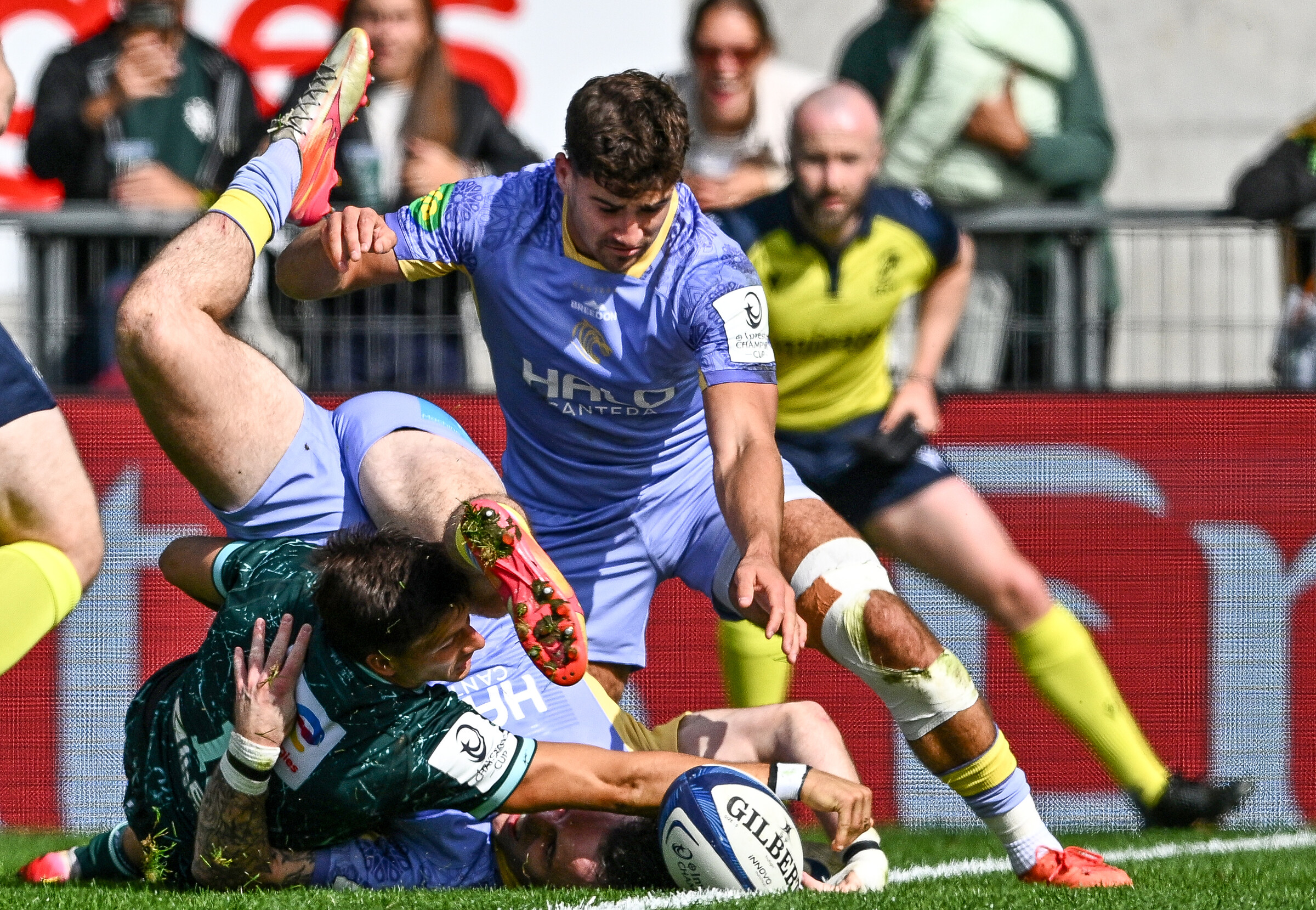
Rodrigo Marta scores for Pau against Leicester, 18 October 2026. ©INPHO/Hugo Pfeiffer.
Bordeaux-Bègles and Montpellier demonstrated two very different parts of the Top 14's appeal. Bordeaux, defending the Champions Cup, were held 36–36 by a Gloucester side that refused to be bullied in the set piece. Louis Bielle-Biarrey's finishing rescued the draw, but the game exposed how much the defending champions rely on the platform underneath their celebrated backline. Their squad also illustrates rugby's increasingly international labour market: France internationals share a dressing room with Tom Willis, an English back-rower who has chosen to build his career in France. Montpellier took the opposite route to success at Bath, turning a 14–10 half-time deficit into a 32–14 victory by making the breakdown and close-quarter exchanges increasingly miserable for the home side. Alex Bécognée and the Montpellier forwards imposed the kind of control that doesn't make many viral clips but wins plenty of rugby matches. One club can cut an opponent apart with a pass; another can win by ensuring that pass never arrives. Both are products of the same league.
France's national-team depth is reflected in that variety. Dupont, Ntamack, Julien Marchand and Thomas Ramos provide Toulouse with an extraordinary spine. Bordeaux can call on Bielle-Biarrey, Maxime Lucu, Matthieu Jalibert and others, while Pau's Attissogbe, Brau-Boirie and Gailleton represent a younger generation competing for greater responsibility. Toulon's Jean-Baptiste Gros and Charles Ollivon, Montpellier's Lenni Nouchi and La Rochelle's Oscar Jégou illustrate how widely elite French talent is spread. That has obvious benefits for France heading towards the 2027 World Cup, but also creates difficult questions about workload, release arrangements and the demands of a domestic calendar that doesn't tend to forgive an off week. A deep league helps produce internationals; it also asks an enormous amount of them. European rugby becomes the stage on which those demands are most visible.

Louis Bielle-Biarrey scores for Bordeaux at Gloucester, 16 October 2026. ©INPHO/Ben Brady.
The less flattering side of the weekend matters just as much. Clermont were beaten 48–23 at home by Leinster after leading at half-time, Stade Français conceded 56 in Pretoria against the Bulls and Racing 92 returned from Munster with another defeat. Those clubs have histories, supporters and resources that demand better than merely making up Champions Cup numbers. La Rochelle beat the Lions, but that fixture took place in profoundly difficult circumstances following the death of Lions player Hyron Andrews and deserves sensitivity rather than another easy sporting superlative. The broader point is that having a well-resourced league does not mean every club is equally well-coached, equally settled or capable of maintaining European standards. Reputation remains a fairly useless form of defence when an opponent begins winning the collisions.
The Challenge Cup makes the domestic picture even more complicated. Toulon's win away to Edinburgh was a welcome positive after turmoil around the club's coaching situation, and Bayonne narrowly held off the Cheetahs, although neither could claim to have made the competition look easy. Castres, down near the foot of the Top 14, at least picked up an 18–9 home win over Benetton to interrupt a frustrating run. Lyon lost a seven-point thriller to the Sharks, Perpignan were beaten at the Dragons and Vannes took a 57–19 hiding at Harlequins. These results aren't evidence that French clubs collectively dismiss the Challenge Cup. They reveal how differently Europe fits into each team's season. For those chasing a domestic title, squad rotation might be a tool for managing success. For those trying to climb clear of the relegation places, every selection has a competing cost. It would be lazy to infer the private priorities of a coach from one team sheet, but it would be equally naive to pretend Europe means the same thing to Toulouse and Vannes.
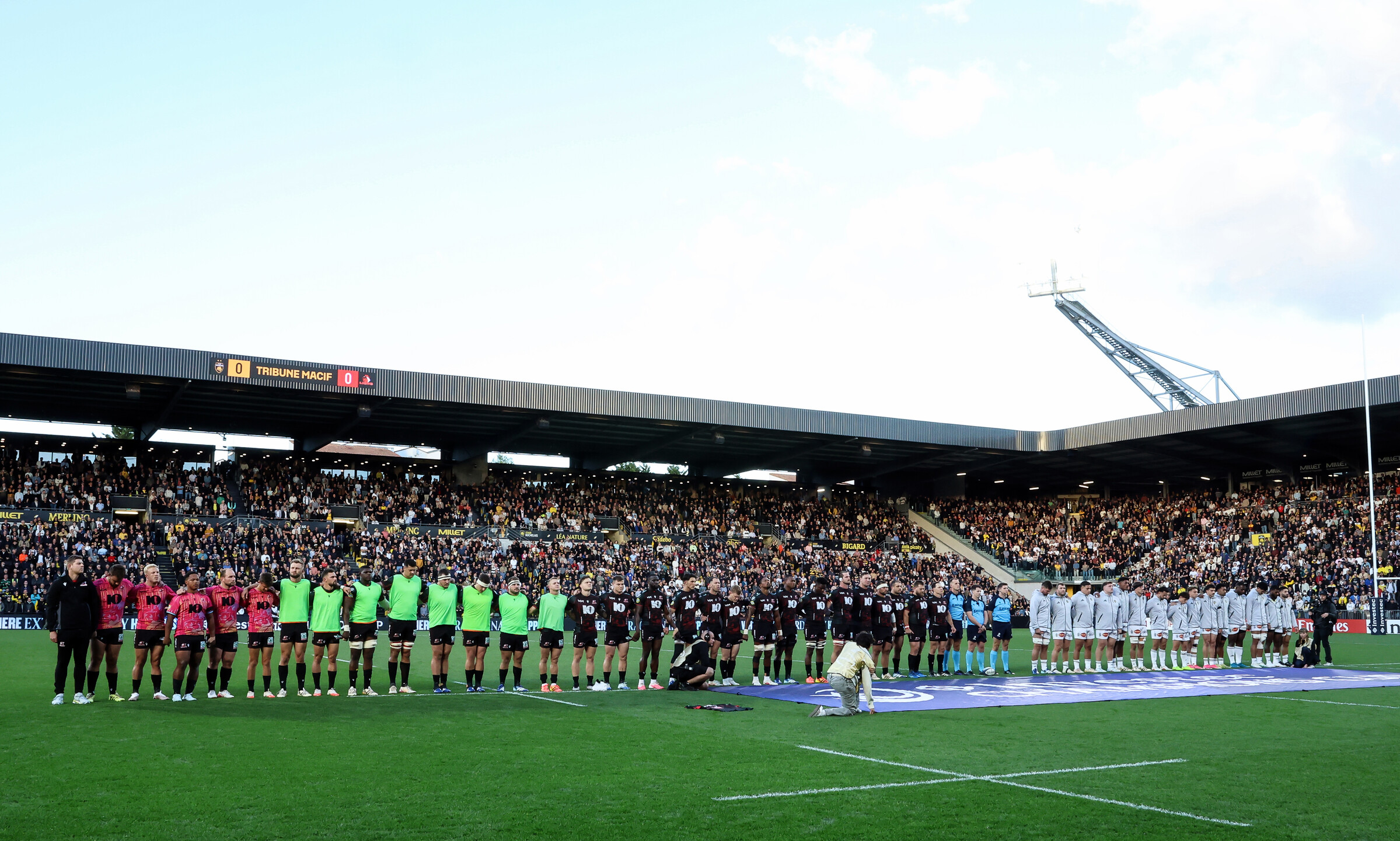
La Rochelle and the Lions observe a minute’s silence for Hyron Andrews, 17 October 2026. ©INPHO/Manuel Blondeau.
There is also a misconception that the strength of the Top 14 is simply the amount of money spent on international stars. Foreign recruitment undoubtedly enriches the league, and no serious assessment should ignore it. But Toulouse's shared habits, Pau's emerging French players, Montpellier's forward coaching and the resilience of clubs with very different budgets all point to a more complicated picture. The league creates a demanding weekly environment in which France-qualified players compete with established internationals from across the world. That can sharpen them, but it also means talented younger French players have to fight for game time. The health of the national side depends not simply on having expensive professional squads, but on enough players getting the responsibility and repeated exposure to become outstanding Test options.
So is the Top 14 Europe's strongest league? After Round 1, the question still deserves a more intelligent answer than a victory count. The French champions found a way to win with 14, Pau's rise looks increasingly convincing and Montpellier demonstrated that physical excellence travels. Yet Bordeaux were held, three established Champions Cup clubs lost and the Challenge Cup showed several French teams are far from comfortable. This is a league of extraordinary depth, but not uniform superiority. Its real advantage may be the range of playing styles, coaching environments and high-pressure fixtures it offers both international stars and emerging players. Whether that translates into another European trophy — and, more importantly, a stronger France side — will be decided over months rather than one weekend. France has plenty of reasons to be confident. It also has plenty of reasons to keep working.
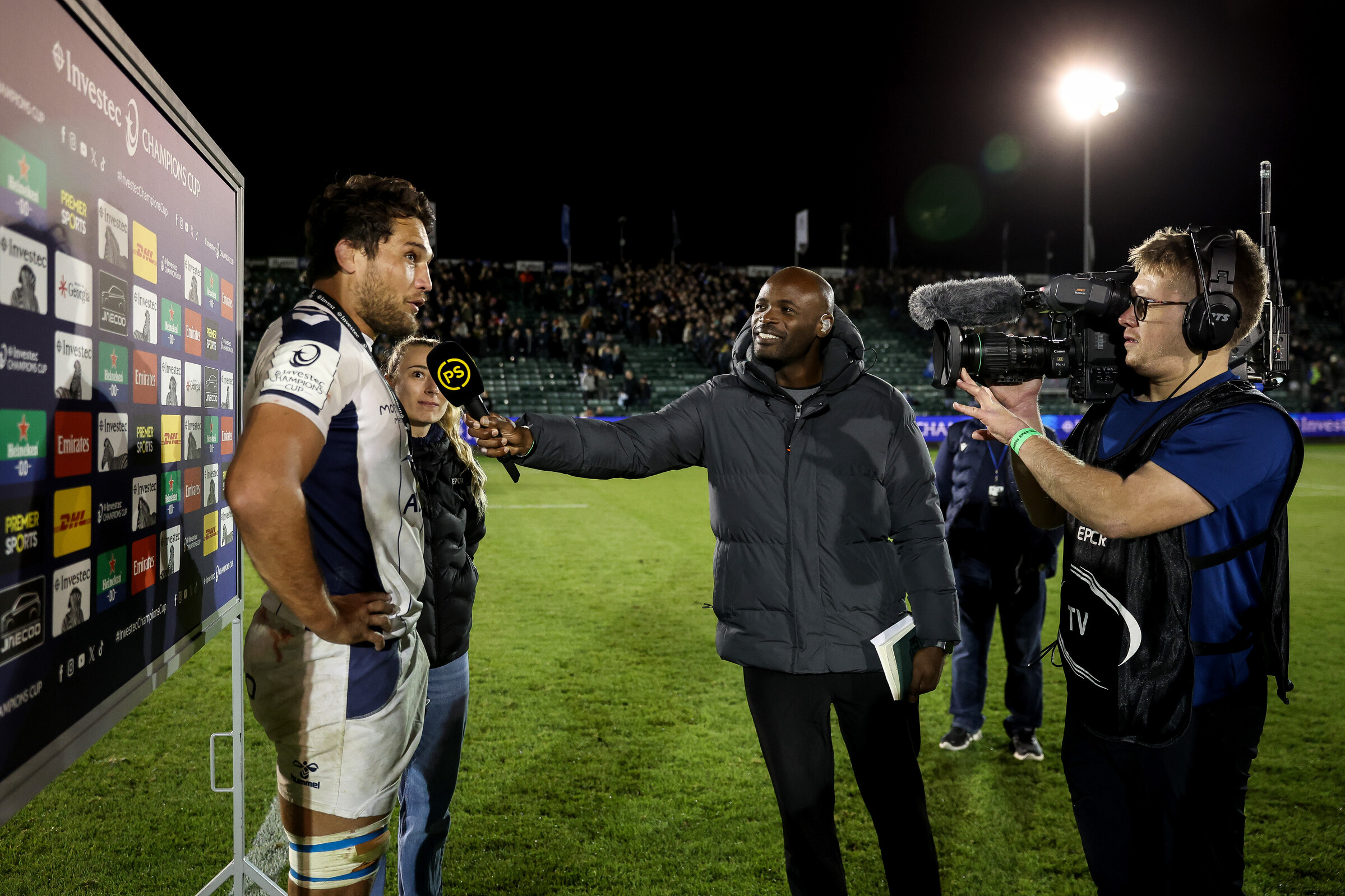
Montpellier’s Alex Bécognée receives the player-of-the-match award at Bath, 17 October 2026. ©INPHO/Cat Goryn.