Advertisement


Only Northampton won among England's eight Champions Cup representatives, but there was more to the opening European weekend than an uncomfortable results column. From Zack Wimbush's hat-trick in Toulouse to Marcus Smith finding his rhythm, the club performances raised a bigger question for English rugby: is all that attacking talent being given the platform to compete with the continent's best?
For three rounds, the Gallagher PREM had been a rather enjoyable advertisement for throwing the ball around and seeing what happens. Then the Champions Cup arrived and English clubs won once in eight attempts, drew once and lost six. That isn't a particularly flattering return for a league that likes to think of itself as one of rugby's most entertaining. But it isn't evidence that English rugby has suddenly forgotten how to play either. Northampton beat Cardiff, Gloucester held European champions Bordeaux-Bègles and Exeter came within a missed late kick of drawing in Toulouse. Elsewhere, the margins were far less encouraging. The interesting question is not whether the PREM can produce exciting rugby. We've had 119 points in a single domestic match to settle that debate. It's whether the teams can produce the same attacking confidence when the opposition makes every collision, exit and decision more difficult.
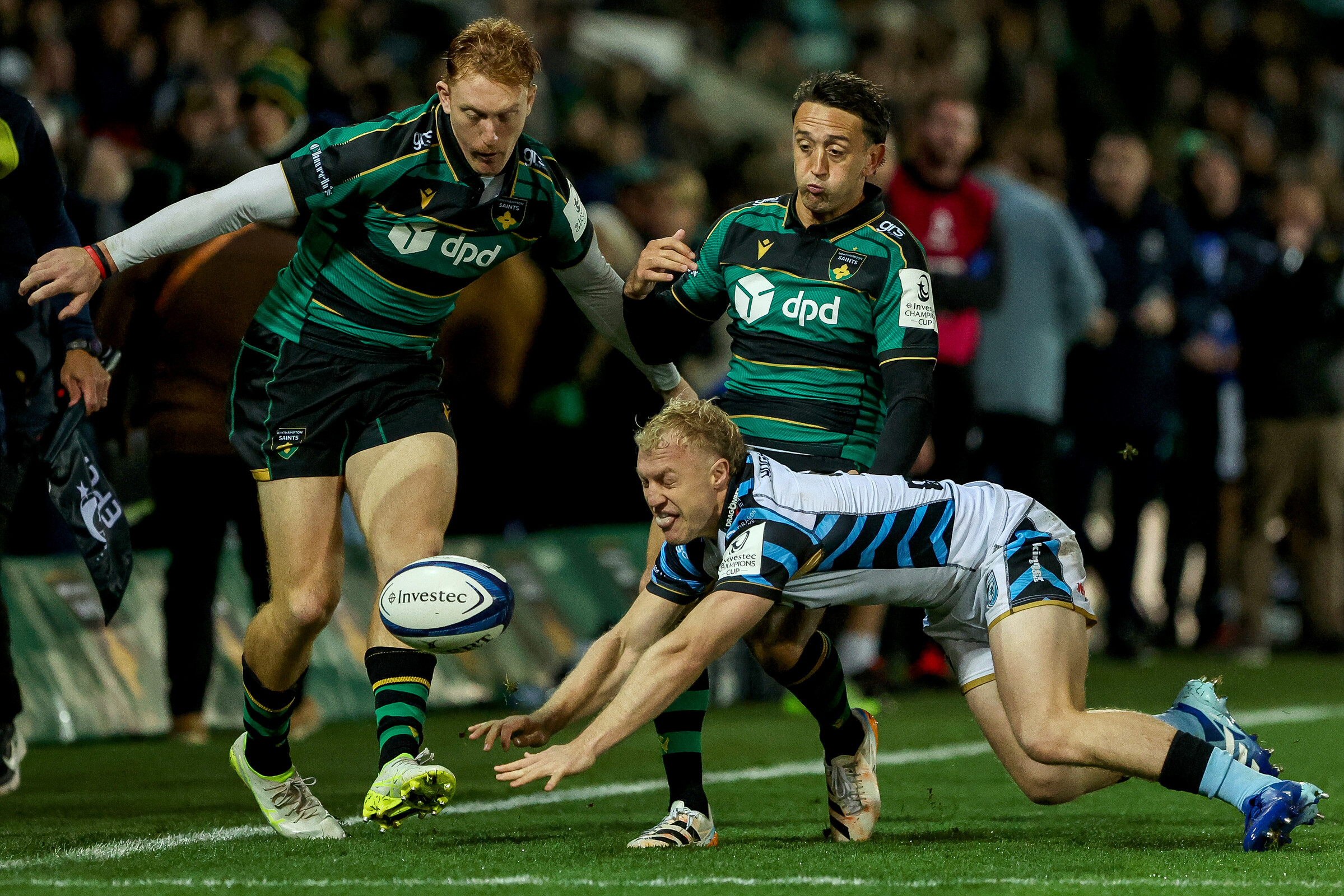
Alex Mitchell contests possession with Cardiff’s Johan Mulder, 18 October 2026. ©INPHO/Cat Goryn.
Northampton were the only English Champions Cup side to get a win, and perhaps the most useful thing about it was that it looked nothing like their 71–48 victory over Bath the previous weekend. Heavy rain and stubborn Cardiff resistance forced a different sort of performance, with James Pater, Toby Thame, George Hendy and Fraser Dingwall providing the finishes in a 28–12 result. Alex Mitchell's influence and the option of bringing Fin Smith from the bench underline why the Saints are an increasingly interesting England production line: established internationals surrounded by younger players getting serious responsibility.
Gloucester's draw with Bordeaux told another useful story. They made the defending champions uncomfortable through their pack, while Wales internationals Jac Morgan and the emerging physical core gave them genuine authority. Exeter, meanwhile, should take encouragement from Zack Wimbush scoring three in Toulouse, but they should also feel the frustration of failing to finish off a team reduced to 14 men for most of the contest. Promise and missed opportunity can exist in the same performance.
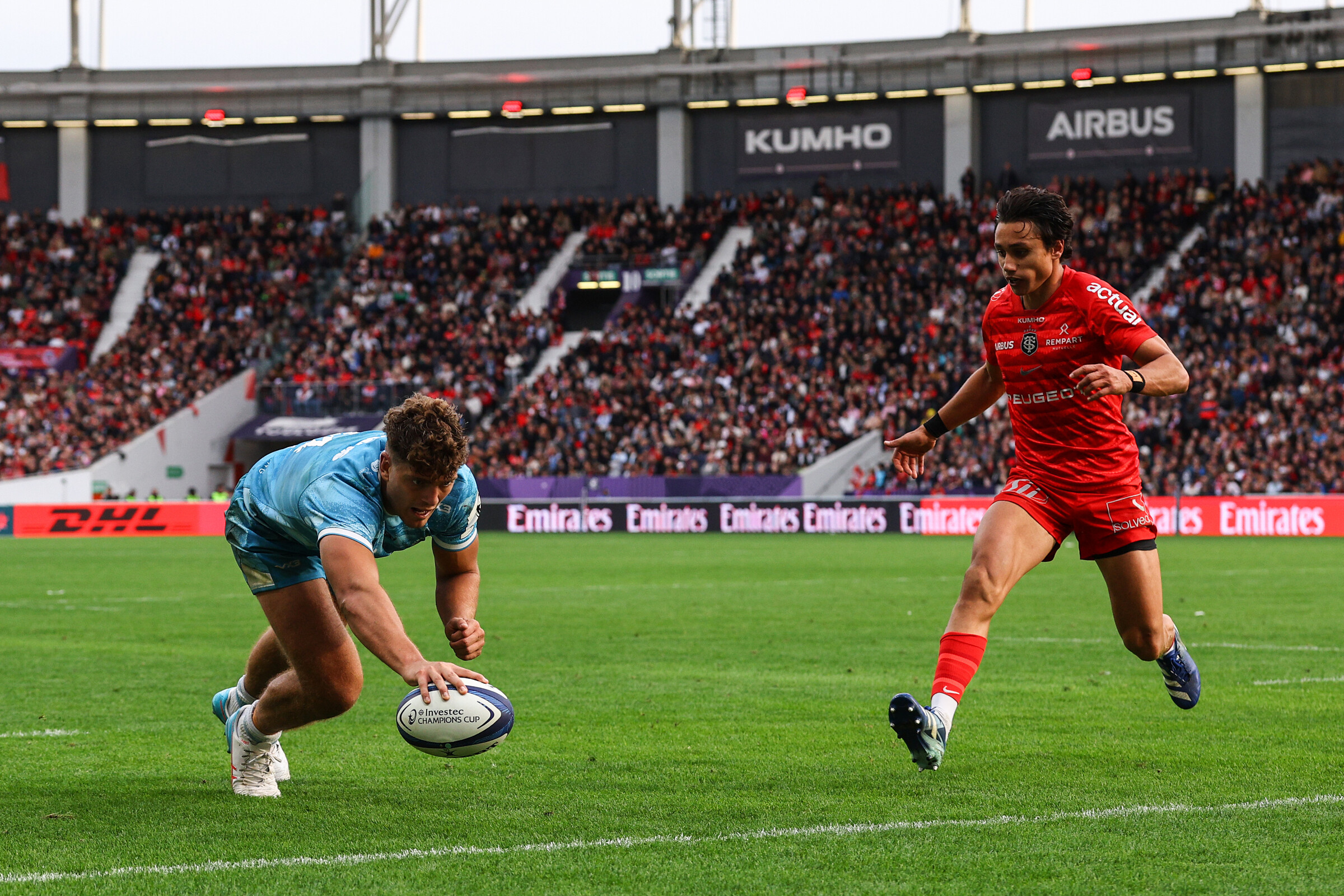
Zack Wimbush scores for Exeter against Toulouse, 18 October 2026. ©INPHO/Ben Brady.
The less encouraging results had something in common. Bath found themselves unable to generate meaningful front-foot ball once Montpellier's breakdown pressure took hold, losing 22 unanswered second-half points. Leicester began competitively in Pau before the French side's movement and finishing turned it into a 41–17 defeat. Sale were in the contest against Glasgow before the visitors' tempo exposed defensive spacing, and Saracens scored plenty at Connacht without ever really getting hold of the game. Bristol's heavily rotated group faced a particularly unforgiving afternoon against the Stormers in Cape Town.
Those are different matches against different teams, not one convenient proof that French and URC clubs do everything better. But there is a recurring lesson: attacking ambition becomes considerably less impressive when it isn't backed by defensive organisation, accuracy around the contact area and enough depth to maintain both for 80 minutes. English clubs don't need less imagination. They need more control over the conditions in which that imagination is used.
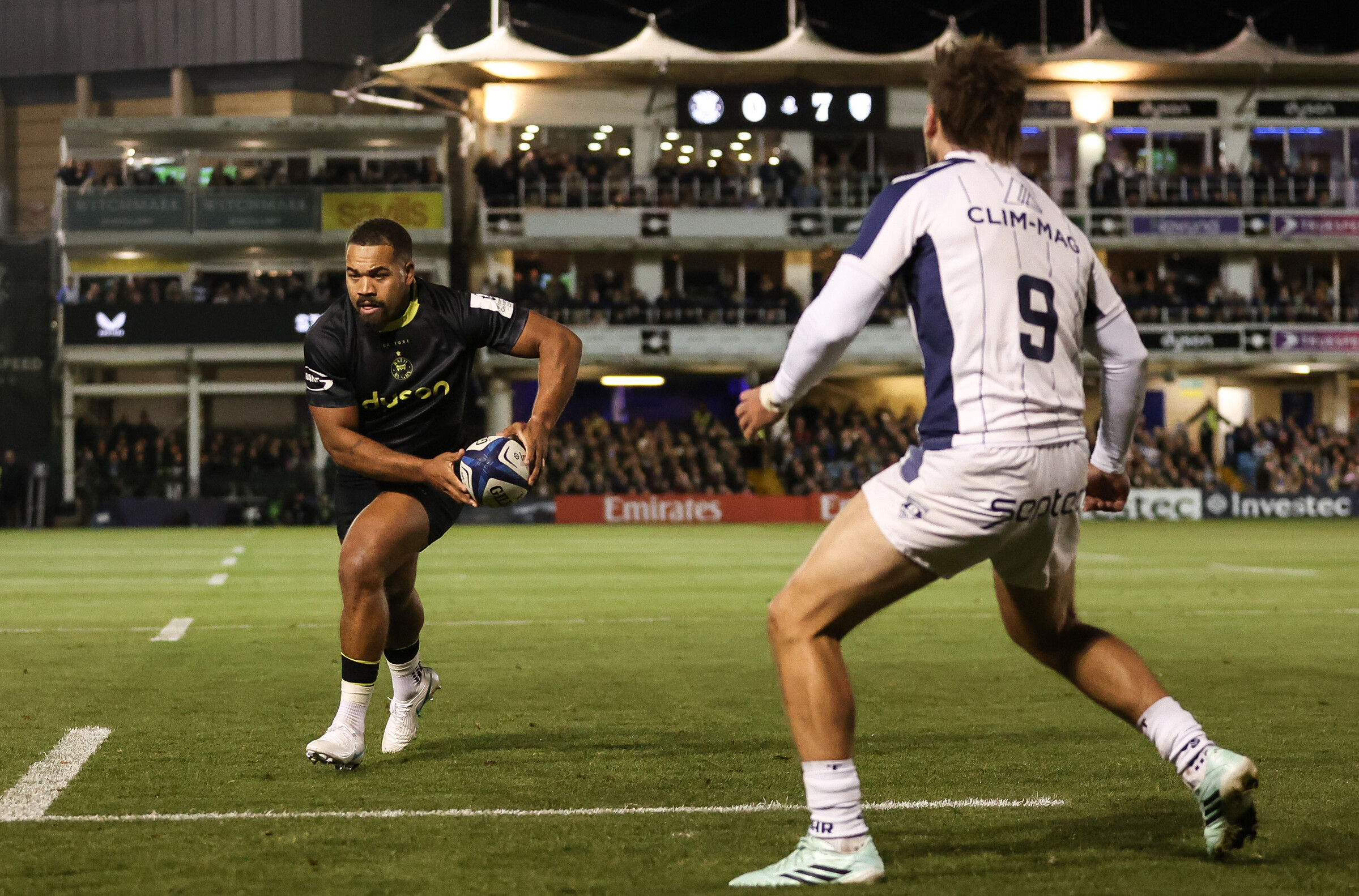
Ollie Lawrence on his way to scoring for Bath against Montpellier, 17 October 2026. ©INPHO/Cat Goryn.
That matters for Steve Borthwick as well as the club coaches. England's player pool is not short of pedigree. Maro Itoje and Ben Earl remain central figures at Saracens, Ollie Chessum brings leadership and power to Leicester, Ollie Lawrence is a major part of Bath's attacking threat and Mitchell is fundamental to how Northampton play. Henry Slade showed his class again in Toulouse, even if his missed penalty will be what many remember.
The next wave is equally interesting: Wimbush attacking the European champions, Pater starting a Champions Cup fixture as a teenager, and young backs such as George Hendy and Jack Bracken gaining exposure to different kinds of pressure. European rugby is valuable for these players precisely because the matches don't always go to plan. Scoring freely against familiar Premiership opponents is one thing; making the same decisions with a La Rochelle forward charging into your face is another.

Ollie Chessum during Leicester’s match at Pau, 18 October 2026. ©INPHO/Hugo Pfeiffer.
There is also a wider question about what 'English club rugby' means for the England team. Gloucester's Jac Morgan and Leicester's Aaron Wainwright are significant Wales internationals; some of the best players in the PREM are helping develop other nations' Test sides. Meanwhile, English-qualified Tom Willis is making himself indispensable at Bordeaux, a reminder that talent does not always remain inside the domestic system, particularly with England's overseas-selection policy limiting opportunities.
That is not an argument against international recruitment or foreign-based careers. It is a reminder that a healthy league and a healthy national team overlap, but they are not identical projects. Clubs need to win, develop younger talent, manage their wage bills and provide a product supporters want to watch. Borthwick needs Test-ready players who can execute under the sort of pressure Europe's best teams applied this weekend.
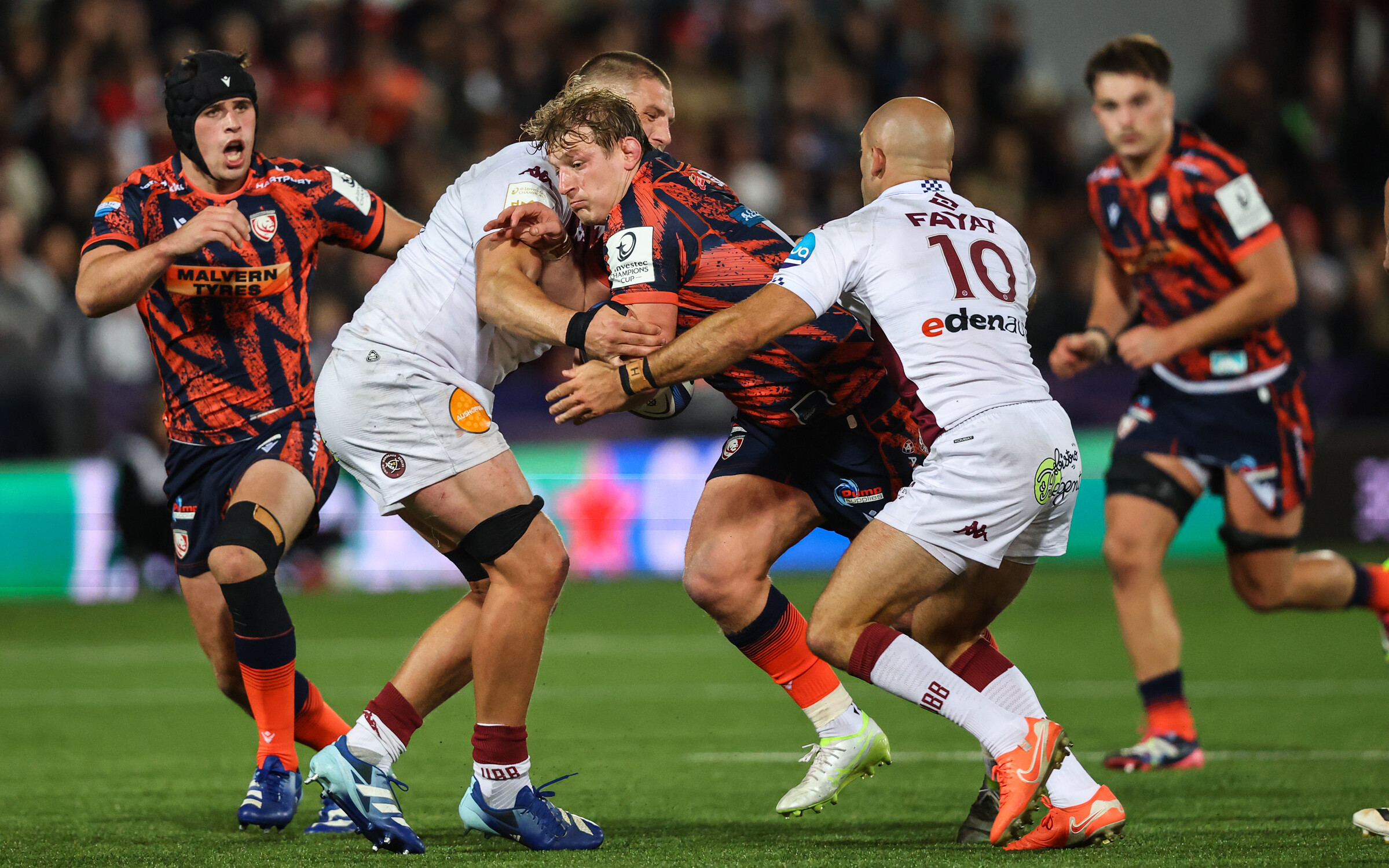
Jac Morgan tackled by Bordeaux’s Tom Willis and Maxime Lucu, 16 October 2026. ©INPHO/Ben Brady.
The Challenge Cup provided a little relief, though it came with important caveats. Harlequins finally found their attacking rhythm and put 57 points past Vannes, with Marcus Smith scoring twice and looking much more like the player Quins need to direct their season. Cadan Murley and Will Evans also helped themselves to doubles. It was a welcome result after three Premiership defeats, but Vannes are struggling badly in France and one afternoon doesn't magically repair a league campaign.
Newcastle's 47–14 defeat at the Scarlets was more sobering. Christian Wade's pursuit of the all-time Premiership try record has been a rare bright spot for the Red Bulls, but the collective problem remains: too often their opponents are able to establish control before Newcastle have properly settled. Different clubs, different circumstances, but both reveal the challenge of building something sustainable rather than relying on occasional individual brilliance.
Nobody should declare a crisis after the opening European round. Gloucester and Exeter were competitive against elite French opposition, Northampton proved they can win ugly and the PREM continues to produce gifted players worth watching. Equally, pretending six Champions Cup defeats are nothing more than an unfortunate draw would be too easy. The league's best clubs must find ways to marry their attacking ambition with the sort of defensive authority and game management that decide European knockout matches. That's a club issue, a player-development issue and, eventually, an England issue. The talent is there. What the opening weekend questioned was whether enough of it is being turned into complete, pressure-proof rugby teams.

Maro Itoje after Saracens’ defeat at Connacht, 17 October 2026. ©INPHO/James Crombie.