Advertisement

The Bulls and Stormers opened the Champions Cup with big wins, the Sharks found a way to win in Lyon and the Cheetahs nearly delivered a memorable upset in Bayonne. But the weekend also brought heartbreaking news for the Lions, making any assessment of South African rugby's European ambitions inseparable from a moment that mattered far more than the results.
There was plenty of rugby to admire from the South African sides over the opening European weekend. The Bulls ran in eight tries against Stade Français, the Stormers put seven past Bristol and the Sharks managed the rather more awkward business of winning away in France. The Cheetahs showed they can trouble established Top 14 opposition despite not enjoying the same regular competition as the URC franchises. Yet the Lions' trip to La Rochelle was overshadowed by the death of their teammate Hyron Andrews in France. He was 31. His club confirmed that the squad chose to play in his honour, and the respect shown around the fixture was a reminder that the game is ultimately about people, not just results. That deserves to sit alongside any discussion of selection depth or European potential, not be turned into another sporting slogan about adversity.
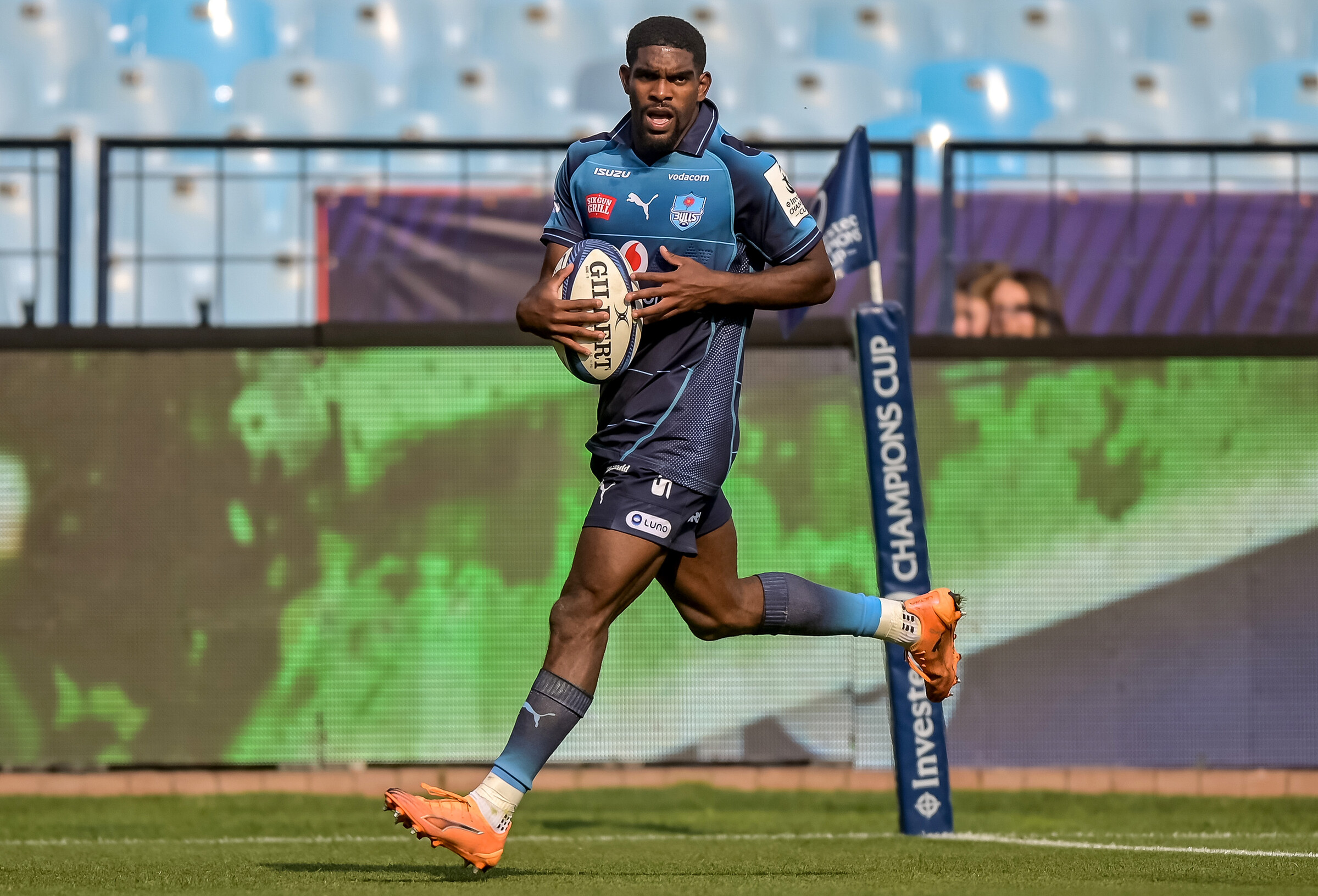
Cheswill Jooste scores the Bulls’ eighth try against Stade Français, 17 October 2026. ©INPHO/Steve Haag Sports/Christiaan Kotze.
On the rugby itself, the most encouraging point is that South Africa's top franchises are beginning to show more than one way of winning. The Bulls' 56–20 victory over Stade Français was built on their familiar carrying power, but there was also speed and precision when they moved possession beyond the gain line. Cheswill Jooste's hat-trick grabbed attention, while Handré Pollard converted all eight tries and Cameron Hanekom brought the sort of powerful, mobile contribution that will interest anyone following the Springboks' back-row options.
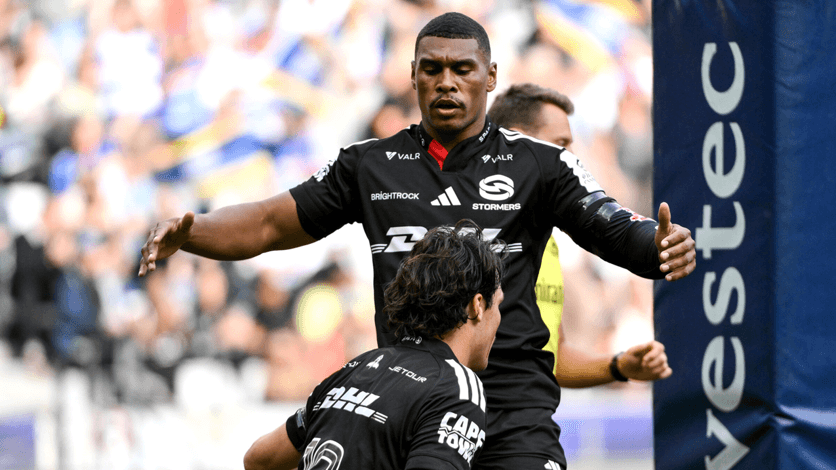
The Stormers were just as effective in Cape Town, with Sacha Feinberg-Mngomezulu directing an attack in which Leolin Zas and Jonathan Roche both scored twice. Against a youthful Bristol selection, the challenge was not merely to be better on paper but to keep executing, even through disciplinary disruption. John Dobson's side did that. Neither result establishes a European champion in October, but both demonstrated what South African rugby looks like when its physical platform is matched by genuine attacking imagination.
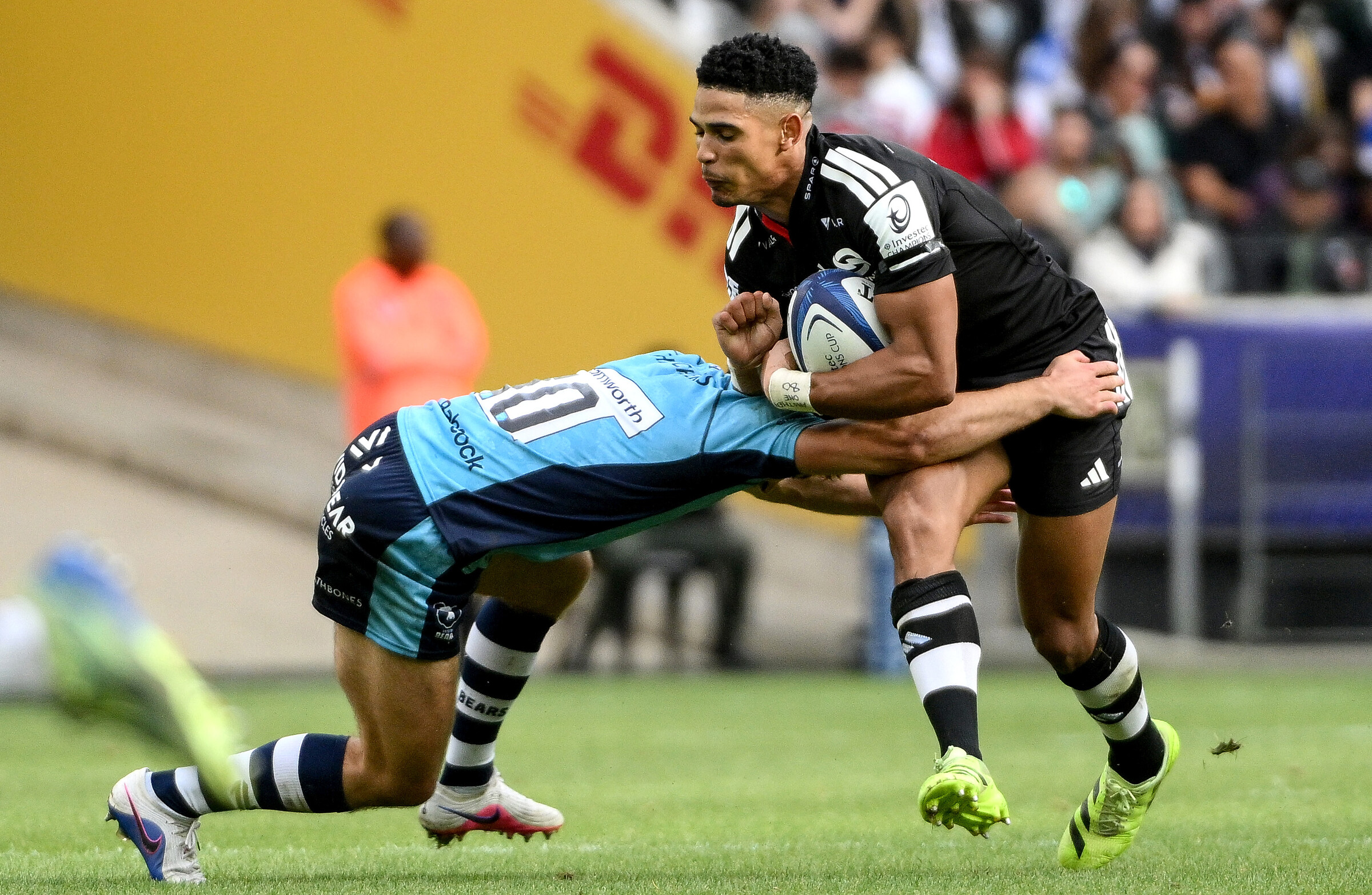
Sacha Feinberg-Mngomezulu is tackled by Bristol’s Sam Worsley, 17 October 2026. ©INPHO/Steve Haag Sports/Thinus Maritz.
For the Springboks, the most intriguing part may be the contrast between those involved rather than any one impressive score. Pollard remains the model of experienced control, particularly when a contest demands accurate kicking and calmer decisions. Feinberg-Mngomezulu offers a different sort of threat, able to attack space and change a defensive picture quickly. Damian Willemse's ability to influence the Stormers' attacking shape provides another example of the versatility available, while Jooste and Hanekom are part of the discussion about the next generation.
A strong club weekend does not guarantee a Test jersey, and no national coach should pick a side from a highlights reel. But having several styles and ages of player thriving in the same professional system is a healthy problem to have. It gives South Africa choices rather than simply replacements.
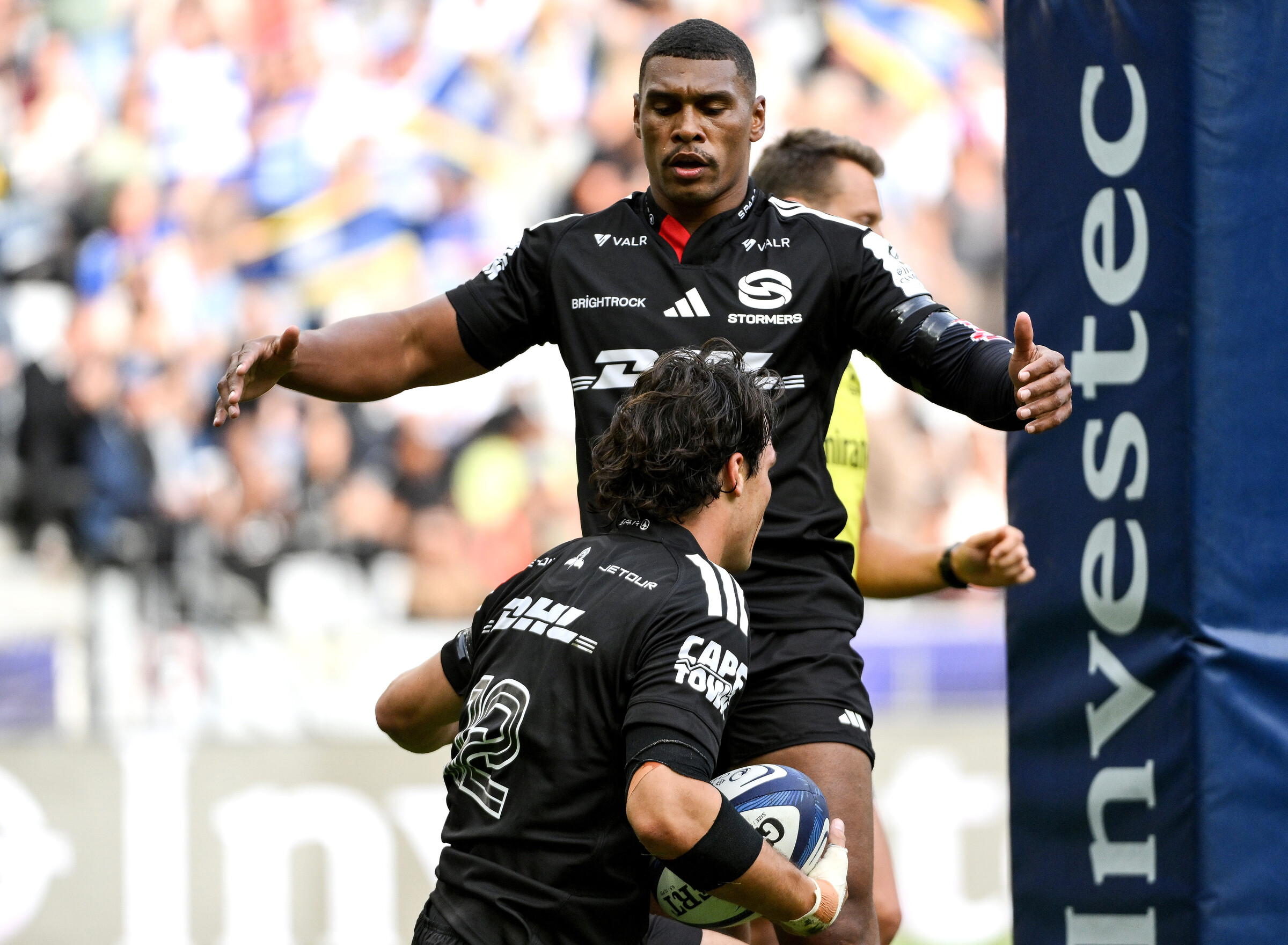
Jonathan Roche celebrates with Damian Willemse against Bristol, 17 October 2026. ©INPHO/Steve Haag Sports/Thinus Maritz.
The Sharks supplied a more revealing test of European readiness by winning 40–33 in Lyon. There was attacking quality, yes, but also plenty that will make the coaching team uncomfortable when they review their defensive work. Lyon had dragged themselves level at 33–33 late on, only for young replacement Lili Bester to finish the decisive try. South African supporters can take encouragement from a side finding a final answer away from home; they should also notice that conceding five tries against a French club is not a recipe for regularly winning knockout rugby. European matches are often decided by how a team responds once its usual control has been challenged. The Sharks handled that specific moment well. The next test is learning to avoid creating quite so much jeopardy in the first place.
Then there are the Cheetahs, whose involvement says something important about South African rugby's professional structure. They led in Bayonne after recovering from a difficult first half and came within two points of winning in France, eventually losing 29–27. For a Bloemfontein side without the same week-to-week URC exposure enjoyed by the Bulls, Sharks, Stormers and Lions, those opportunities matter enormously. They provide meaningful benchmarks for players, coaches and the wider programme. It is easy to talk about the importance of a strong domestic pathway, but the step between domestic competition and elite international rugby needs fixtures that test both skill and decision-making. The Cheetahs looked capable of belonging in that company. The question is how frequently they can be given the chance to prove it.
Travel will remain part of every South African European conversation, but it shouldn't become a reflex excuse for every defeat or a footnote whenever a South African side wins at home. The Bulls and Stormers had the advantage of playing in front of their own supporters, against opponents dealing with long journeys and, in Bristol's case, significant rotation. They still had to turn that into convincing results, and did. The Sharks were the better advertisement for the difficulty of crossing continents and delivering on the road. The really persuasive evidence of South African clubs' European strength will come in difficult away knockout fixtures, when the weather, rhythm and depth of the opposition look rather different from a hot afternoon at Loftus or DHL Stadium.
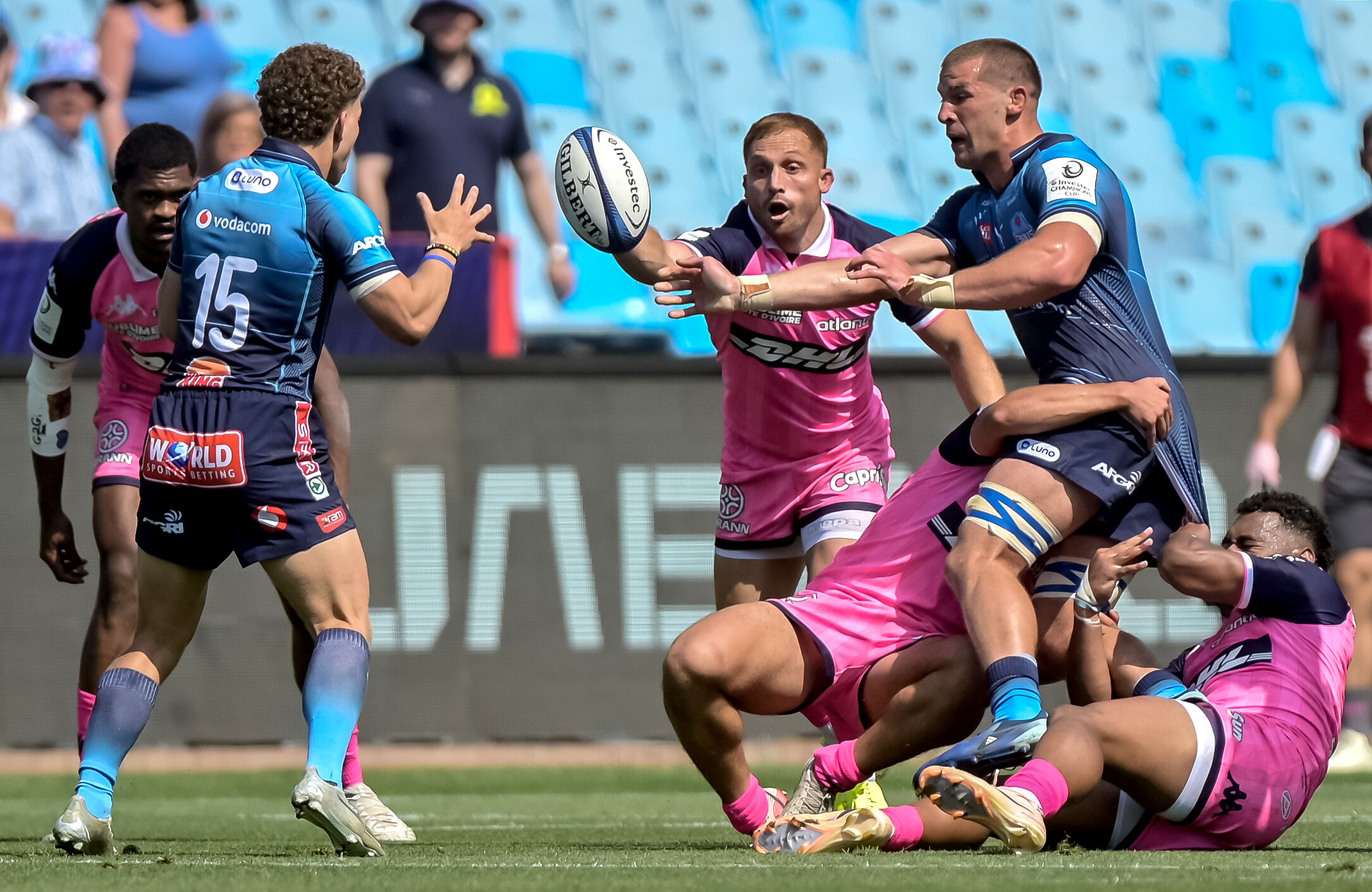
Luan Giliomee and Cameron Hanekom at Loftus Versfeld for the Bulls’ Round 1 match, 17 October 2026. ©INPHO/Steve Haag Sports/Christiaan Kotze.
As for the Lions, there is no useful attempt to rank their performance alongside the other four clubs this weekend. They played La Rochelle in circumstances no rugby team should have to face, and the match's emotional significance cannot be measured by their 31–14 defeat. The Lions community, Andrews' family and his teammates deserve space and respect. There will be other weekends to discuss whether the Johannesburg side has the squad depth to make a lasting Champions Cup run. This one should not be used to manufacture a motivational narrative about grief.
The wider South African picture remains encouraging. The franchises are producing players of genuine international quality, coaches have more attacking weapons to combine with traditional forward strengths, and the Cheetahs continue to demonstrate why opportunities beyond the top four franchises matter. There is still a gap between winning a European pool opener and lifting a trophy, particularly when that journey takes teams repeatedly away from home. But the capacity is there, and the next wave of Springboks has plenty of opportunities to learn alongside established names. This was a weekend of three victories, two defeats and far more than one lesson. Above all, it was a reminder to celebrate the rugby without losing perspective on the people who make it possible.
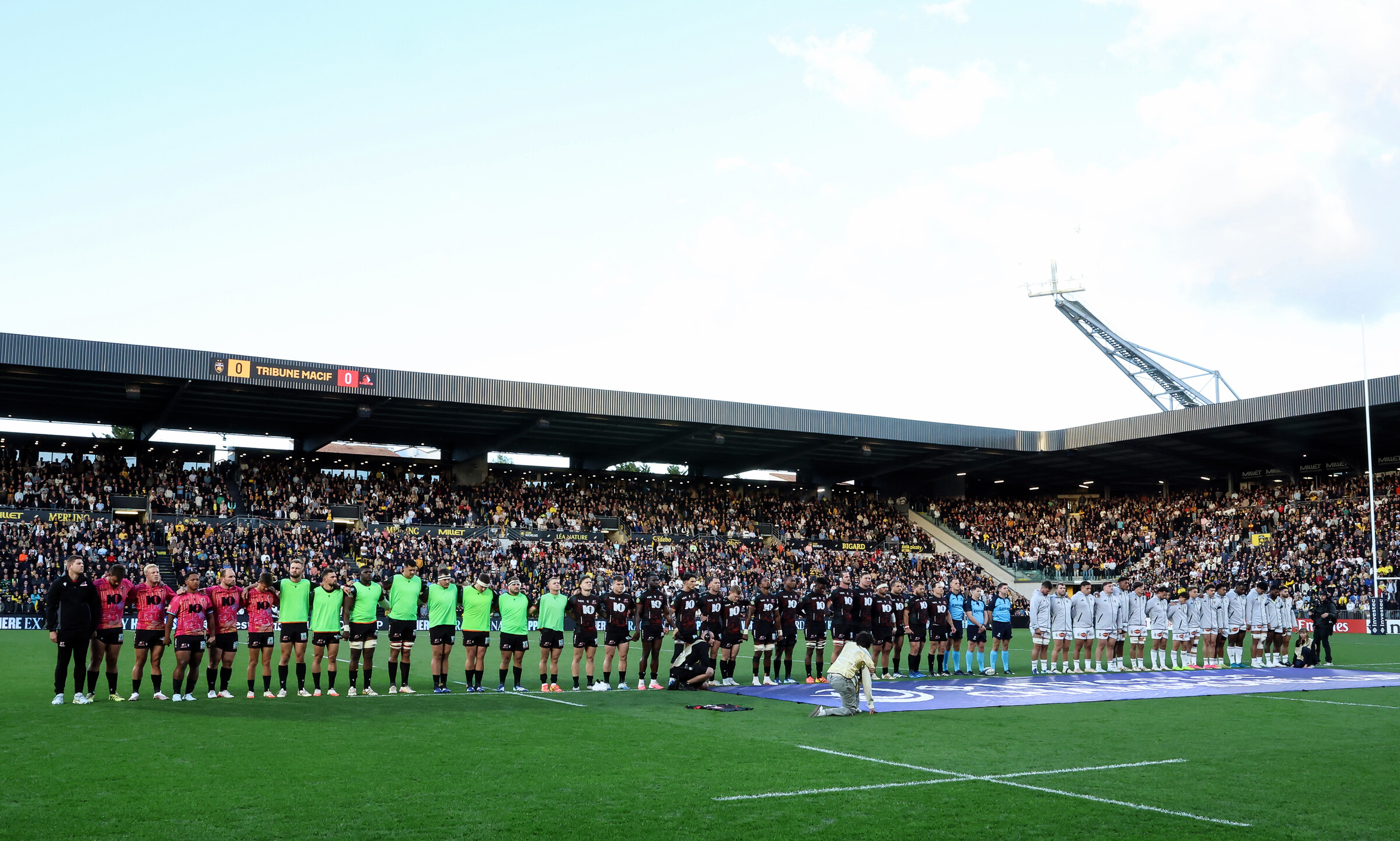
La Rochelle and the Lions observe a minute’s silence for Hyron Andrews, 17 October 2026. ©INPHO/Manuel Blondeau.