Advertisement

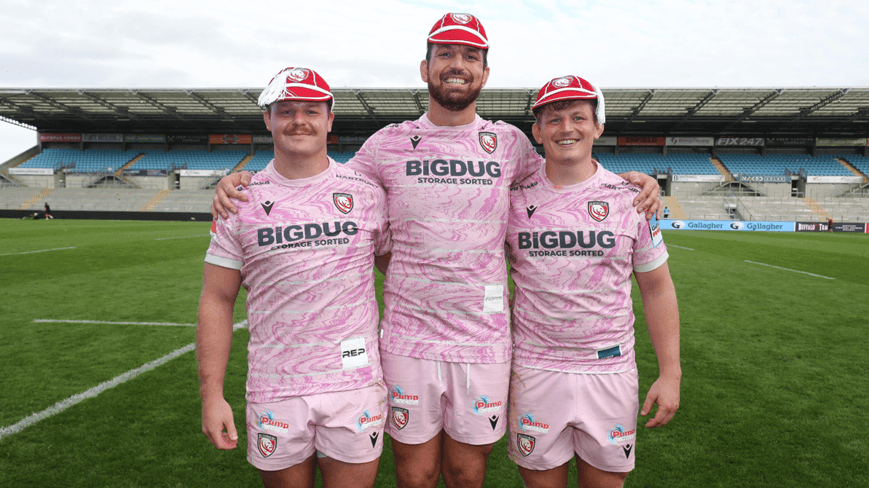
Northampton began their title defence with nine tries, Gloucester impressed at Exeter and Saracens edged a dramatic contest at Leicester as four visiting teams won on the opening weekend of the 2026/27 Gallagher PREM season.
There was no gentle introduction to the new season. Northampton provided the biggest winning margin, Bath combined individual brilliance with forward power, and Bristol repeatedly answered Sale’s attempts to turn their match around. Every winning side collected a try bonus point, leaving the early table neatly divided between five teams on maximum points and five already reviewing what went wrong. The results were clear enough; the performances beneath them offered rather more to discuss.


W. Porter (16'), C. Cunningham-South (25'), P. Delgado (44')
Tries
du Preez (12'), J. Cokanasiga (20'), S. Carreras (32'), D. Frost (40+2'), E. Richards (71')
C. Slevin (45')
Conversions
F. Russell (13', 21', 33', 40+3')
Santi Carreras produced the moment that will dominate the highlights, but Bath’s victory involved more than one exceptional piece of improvisation. With Harlequins threatening to move the ball towards Cadan Murley, the full-back intercepted the passing movement with his boot, gathered and raced away from deep inside his own half. It was a substantial swing: Carreras turned a promising Quins attack into seven points at the other end through his own anticipation and skill.
Bath had already scored through Dan du Preez and Joe Cokanasiga, while Will Porter and Chandler Cunningham-South kept Quins in touch. Carreras’s intervention changed the balance before Dan Frost added the visitors’ fourth try, establishing a 28–10 half-time lead. Quins were creating opportunities, but Bath were making more of the moments that mattered.
Pedro Delgado’s first Harlequins try reduced the deficit to 11 early in the second half, but the comeback stalled through handling errors and missed chances. Bath eventually returned to their maul, with Ewan Richards supplying the closing score. That combination of opportunism and a dependable close-range option made the difference. Quins had enough attacking promise to avoid treating this as a hopeless start, but not enough accuracy to convert pressure into a sustained challenge. Bath, meanwhile, did not need to dominate every period to leave with five points.


J. Pater (3', 14', 76'), G. Hendy (22'), T. Freeman (24', 48', 61'), A. Coles (39'), O. Sleightholme (73')
Tries
C. Wade (11', 37'), C. Jordan (57'), W. Kok (79')
F. Smith (4', 22', 40', 49', 62'), A. Belleau (73', 77')
Conversions
B. Connon (12'), Z. Henry (38', 58')
Tommy Freeman and James Pater shared six tries as Northampton began their title defence emphatically. Yet the most encouraging feature was not simply the finishing. Saints repeatedly connected their forwards and backs, moving Newcastle’s defence before finding the player with space to attack. George Hendy, Alex Coles and Ollie Sleightholme supplied the other tries in a performance that offered threats across the side.
The first-half turning point came when Harrison Obatoyinbo was sin-binned for tripping Hendy. Northampton scored 17 points during his absence, converting an early contest into a substantial advantage. Newcastle did find responses, particularly through Christian Wade’s first-half double, but their inability to build momentum after scoring was costly. Coles crossed immediately after Wade’s second, restoring a 17-point cushion before the interval. Saints were not merely scoring frequently; they were repeatedly cancelling out Newcastle’s attempts to recover.
Fin Smith took the player-of-the-match award, underlining the influence behind the hat-tricks. Phil Dowson also highlighted improved protection of possession at the breakdown as the foundation for Northampton’s attack. For Newcastle, four tries and a bonus point offered something to retain, with Cam Jordan and Werner Kok joining Wade on the scoresheet. But attacking encouragement cannot obscure nine conceded. Saints demonstrated what Newcastle still need to develop: the ability to turn a good passage into sustained control rather than another brief interruption to the opposition’s scoring.


J. Iosefa-Scott (14'), E. Roots (37'), S. Varney (61'), L. Gulley (75')
Tries
B. Loader (4', 22'), S. Atkinson (18'), D. Lake (40', 45'), W. Joseph (59'), J. Denny (80')
H. Slade (15', 62')
Conversions
C. Atkinson (18', 23', 42', 60'), G. Barton (81')
Gloucester’s first league win at Sandy Park since 2015 was built on variety. Ben Loader and Dewi Lake scored twice each, but their opportunities came from different sources: accurately placed attacking kicks created space for the backs, while the maul provided a reliable close-range threat. Exeter, whose preparations had been disrupted by illness and existing absences, struggled to contain both.
Ben Redshaw’s kick-pass created Loader’s opener, Caolan Englefield chipped through for Seb Atkinson, and Charlie Atkinson supplied the crossfield kick for Loader’s second. Gloucester were not kicking simply to surrender possession or move the contest elsewhere. They were identifying space and attacking it. Lake’s try from a maul before half-time secured the bonus point and a 26–12 lead, providing a different problem for an already stretched defence.
Lake struck again after the break before Will Joseph’s long-range individual effort took Gloucester clear. Exeter eventually collected a four-try bonus point, with Louie Gulley adding to scores from Josh Iosefa-Scott, Ethan Roots and Stephen Varney, but Junior Denny’s late debut try ensured Gloucester finished with seven. The Chiefs’ late improvement offered limited comfort after the result had largely been decided. Gloucester’s stronger takeaway was the range of their scoring options: opponents cannot solve this attack merely by closing down one area of the field. The next test is reproducing that accuracy when the resistance is less accommodating.


L. Cowan-Dickie (6'), T. O'Flaherty (42', 68')
Tries
L. Rees-Zammit (12', 23'), H. Randall (38', 56'), T. Gwilliam (72')
G. Ford (7', 43', 69')
Conversions
J. Williams (39', 56', 73')
G. Ford (15')
Penalties
J. Williams (31')
Bristol’s most valuable quality in Salford was their ability to answer pressure. Sale opened through Luke Cowan-Dickie, but Louis Rees-Zammit’s two first-half tries and Harry Randall’s close-range finish helped the visitors establish a 20–10 interval lead. Rees-Zammit provided the finishing out wide; Randall offered a different threat around the fringes. Bristol were finding points through more than one route.
Tom O’Flaherty twice threatened to change the contest after the break. His first try brought Sale within three, only for Randall’s second to restore the ten-point gap. O’Flaherty then scored again following Joe Carpenter’s break, making it 27–24 and putting the outcome back in question. Bristol responded with replacement hooker Tomas Gwilliam’s close-range try, converted by James Williams, rather than allowing Sale to build towards a decisive final push.
That sequence explains the result better than the final margin alone. Sale remained competitive and produced dangerous attacking moments, but Bristol repeatedly supplied the next important score. With eight recruits making their first league appearances for the Sharks, there is room for combinations to develop, although handling errors left opportunities unused. Bristol’s reward was a maximum-point away win; Sale’s frustration was finishing without a bonus point despite twice getting within striking distance during the second half.


S. Kata (15'), G. Hamer-Webb (26', 44', 50'), A. Radwan (53'), J. Thompson (66')
Tries
J. Gonzalez (1'), T. Elliott (9'), E. Daly (33'), B. Earl (47'), R. Segun (60', 72')
B. Searle (16', 51', 54', 67')
Conversions
F. Burke (2', 9', 34', 48', 61')
Twelve tries and a two-point margin made Welford Road the weekend’s tightest finish. Saracens led 21–12 at half-time, but Leicester’s second-half response turned a promising away performance into a much more demanding examination. Both sides finished with six tries, with the visitors converting one more than their hosts.
Gabriel Hamer-Webb completed a hat-trick before Adam Radwan put Leicester ahead. Nick Isiekwe’s 20-minute red card for a high tackle on Freddie Steward then appeared to strengthen the Tigers’ position. Saracens responded through Rotimi Segun, James Thompson restored Leicester’s advantage, and Segun struck again in the 74th minute after Tarek Haffar’s yellow card. The closing scrum penalty allowed the visitors to protect their lead.
Tomos Williams earned player-of-the-match honours on his Saracens debut. For Leicester, two bonus points were a return, but not a substitute for closing out a winning position. The useful distinction is between creating enough opportunities to win and managing the passages that secure the result. Both teams demonstrated the former. Saracens ultimately delivered the latter, despite making their task considerably harder through the red card.
The opening round offered plenty for attacking coaches to appreciate and considerably more for defensive coaches to examine. Northampton’s connected running, Gloucester’s kicking variety, Bath’s maul and Bristol’s responses under pressure all provided identifiable strengths beyond the scores themselves. At Leicester, the final outcome still depended on a scrum after an afternoon full of tries. That is a useful perspective for the season ahead: attacking quality can create a winning position, but accuracy, discipline and the ability to finish the job determine whether it becomes five points.