





France



South Africa
A. Grandidier-Nkanang (14'), T. Attissogbe (23'), L. Bielle-Biarrey (31')
Tries
J. Wessels (29'), C. Reinach (50'), M. Marx (71')
M. Lucu (15', 23', 32')
Conversions
S. Feinberg-Mngomezulu (30', 51')
France beat South Africa 21–19 at Stade de France in the 2026 Nations Championship, with Antoine Dupont steering the hosts at fly-half. Les Bleus led 21–7 at half-time, then held off a Springbok fightback in a Round 5 contest shaped by missed chances, yellow cards and Jasper Wiese’s 20-minute red card.
Start with the context. France led the Northern pool and rolled the dice at 10 because the injury list forced the issue; Maxime Lucu ran the base, Dupont ran the picture. The Springboks arrived with their No 1 jersey under threat and a bench that usually bends finishes to their will. The last two meetings in Saint-Denis had gone their way. Not this time, largely because France front-loaded points and the Boks left too much out there in the first half to make their second-half surge count.
Why did it finish as it did? France struck when the Boks were light and when the tackle wasn’t sticking. Lood de Jager’s early yellow opened space and the hosts took it: three converted tries before the break, finished by Aaron Grandidier-Nkanang, Théo Attissogbe and Louis Bielle-Biarrey. That wasn’t luck. Dupont’s willingness to square up the line defender drew help from the Bok back row and released edges; Lucu’s tempo was crisp; and France’s midfield carried hard enough to win contacts. South Africa missed too many first-up shots in that window and paid full freight on the scoreboard.
The officials mattered. Piardi and his team — Christophe Ridley and Gianluca Gnecchi on the touchlines, Matteo Liperini in the booth — were busy. Cards on both sides framed the contest: de Jager’s yellow hurt early; Lucu then sat before half; soon after the restart Jasper Wiese saw red, only for France to burn two more yellows of their own and lose all second-half momentum. It became a messy, stop-start arm-wrestle with each side playing long stretches short-handed. In that chaos the Boks, down a man, actually controlled most of the half.
Set-piece tells a story too. South Africa were flawless at scrum and lineout, went 10 from 10 on their own feed and 15 from 15 at the throw. Yet possession was converted into just two second-half tries — Cobus Reinach sniffed one out, and Malcolm Marx did what he always does from tight range — because France’s defence scrambled well enough and the Boks’ accuracy in the red zone flickered. One late missed conversion left them two short. The irony is that France, who couldn’t buy a point after the interval, won without a second-half score.
Match Stats
CARRIES
CLEAN BREAK
DEFENDER BEATEN
TACKLE
MISSED TACKLE
TURNOVER WON
TURNOVERS CONCEDED
PENALTY CONCEDED
YELLOW CARD
RED CARD
POSSESSION
SCRUMS
LINEOUTS
Individuals shaped the pattern. Dupont at 10 was not a gimmick: strong defence, a clean line break, four defenders beaten and a try assist against this rush is real currency. Francois Cros chopped all night — 18 tackles — and when the scrum wobbled, Peato Mauvaka’s entry steadied the lineout. Grégory Alldritt led early carries and worked hard on the floor even if he missed a few shots. For South Africa, Pieter-Steph du Toit punched 17 carries and two breaks, Damian Willemse and Jesse Kriel found back-field metres, and the bench again added bite — Jan-Hendrik Wessels scored before half and Marx after it — but Wiese’s red loomed over everything the visitors did well.
Does the margin flatter France? A bit. They were 21–7 at the half and then spent 40 minutes absorbing pressure, coughing penalties and surviving. Three yellow cards and a creaking scrum aren’t the hallmarks of control. But you can also argue the Boks’ first-half looseness and the red were self-inflicted wounds that make a two-point deficit feel about right. Miss fewer tackles in that opening stanza and this is a different night.
What does each side take from it? France get confirmation that Dupont can run a Test at 10 against the most punishing defence in the sport, and that their strike on the edge remains sharp even without a specialist fly-half. They also leave with clear work to do: control after half-time, card management, and set-piece stability under heat. If they intend to close out the Northern pool and make Finals Weekend more than a photo-op, they can’t try to nurse leads for 40 against elite benches.
South Africa leave Paris with a bruise that won’t change how they see themselves, but with reminders they’ll hear again in Dublin: early defensive slips are expensive, and discipline is non-negotiable when you already trust your maul and your lineout. They created enough line breaks and owned enough ball to win; the shapes are fine. The edge wasn’t. One missed kick and one red card carry a season’s worth of lessons when the margins are this thin.
The headline will be France’s pool position and a rare Saint-Denis win over the Boks with Dupont steering the bus. The substance, once the full analytical chops land, will likely read much the same: a selection bet paid off, a giant blinked first, and the rest was two teams testing just how far you can push the line before it bites back.
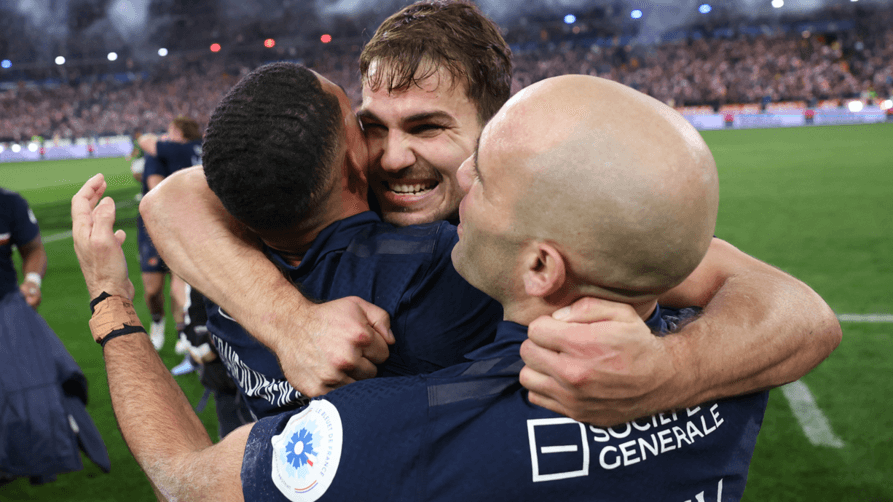
Photo: Antoine Dupont celebrates with France teammates after the match, 13 November 2026. Florencia Tan Jun – Nations Championship/Nations Championship via Getty Images.