Advertisement

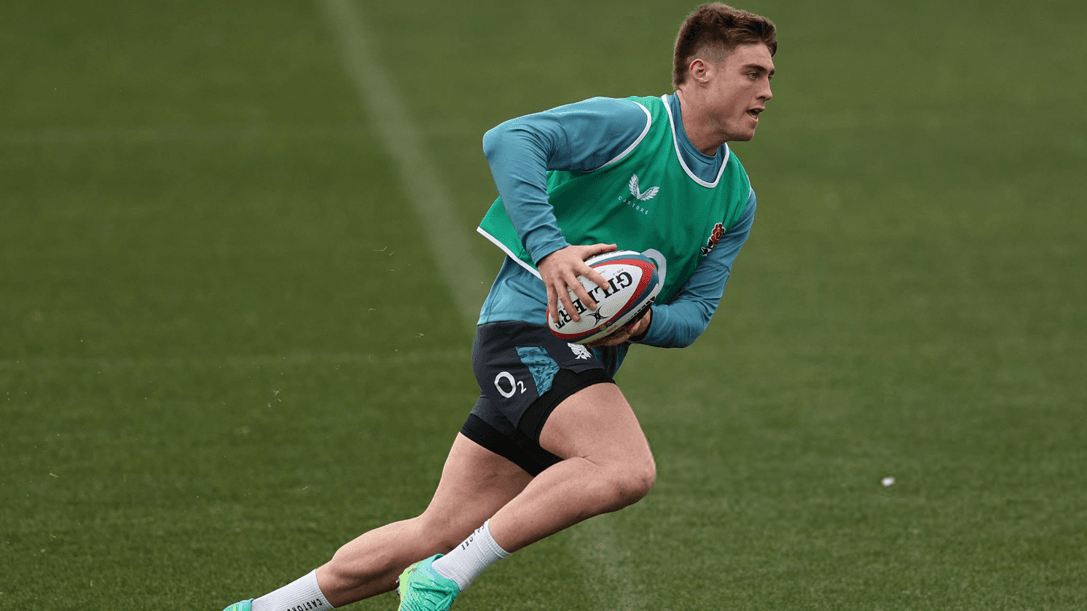
Tommy Freeman, the Northampton Saints star who has emerged as one of England’s most prolific attackers in recent seasons, is poised to become an even more valuable asset for club and country in 2026, and not just on the wing. Having built his reputation as one of England’s best finishers out wide, Freeman’s evolving role at outside centre (No 13) offers England invaluable tactical flexibility and depth as they look ahead to major campaigns and tournaments. After Northampton Saints obliterated Harlequins at a freezing cold Franklin’s Gardens, there’s an interesting discussion on where the 24 year old fits best for the National Team, short term and long term.
Freeman exploded onto the scene as a winger, finishing the 2024-25 season with 23 tries for Northampton Saints and England, and becoming the first England men’s player to score in every round of a Six Nations campaign, a remarkable scoring run that highlighted his finishing flair and consistency. His blend of pace, power, aerial skill, and strike-line running has made him one of the most feared attackers in the Premiership and a key figure in England’s back-line.
Yet while England boast a strong array of wing options, including Immanuel Feyi-Waboso, Tom Roebuck, Ollie Sleightholme, Cadan Murley, Will Muir and Henry Arundell, centre positions have been comparatively thin on world-class options. Coaches are increasingly eyeing Freeman’s attributes as ideal for outside centre, where his ball-carries, physicality and vision can unlock defences from midfield.
The move from wing to centre is not a mere experiment: it reflects both England’s strategic needs and Freeman’s own ambition to grow as a player.
Attacking variety: At 13, Freeman has more opportunity to touch the ball earlier, orchestrate attacking shapes, and link play between the inside backs and the wings. His ability to exploit space and beat defenders one-on-one gives England a dangerous extra dimension in the midfield.
Physical presence: Standing over 6ft and carrying significant power, Freeman offers an added punch in the midfield battle, something that can be decisive in tight Tests and knockout rugby.
Tactical flexibility: With his pace and distribution skills, Freeman can serve as both a finisher and a creative threat from centre, providing head coach Steve Borthwick the option to shuffle his back-line without losing attacking potency.
Squad balance: England’s back-three depth is strong; adding Freeman at 13 allows Borthwick to retain other match-winners on the wings while addressing a long-term need at centre. Wales, watch out next month.
Freeman has openly acknowledged his desire to establish himself at 13 long-term. While still one of England’s go-to wings, he recognises that broadening his positional skill set not only makes him harder to leave out of the squad but also aligns with how coaches view the modern back-line: versatile, multi-dimensional, and adaptive.
At Northampton Saints too, the club is supportive of his transition, understanding that having “two strings to his bow” makes Freeman a more all-around threat and increases his overall impact on games.
As England continue to build toward major competitions in 2026 and beyond, Freeman’s emergence as a legitimate No 13 option could be a game-changer:
Squad depth: His ability to cover wing and centre seamlessly allows England to carry extra options on matchdays, specialists on the bench who can cover multiple roles.
Matchday tactics: Against top international defences, having a centre who threatens like a winger forces opponents to adapt their defensive patterns, often creating mismatches elsewhere.
Injury resilience: Rugby at Test level is punishing. A player of Freeman’s calibre who can switch between key back-line roles gives England a built-in contingency when injuries strike.
Long-term value: With younger wingers coming through and competition for wing spots intensifying, becoming a top-class No 13 ensures Freeman’s place in the national setup for years.
Tommy Freeman’s evolution from one of England’s most lethal wingers into a credible outside centre represents more than a positional shift, it’s a strategic boost for both Northampton Saints and England Rugby Union. His pace, physicality and attacking instinct, married with a growing midfield acumen, make him a unique asset in 2026’s fast-paced, multi-phase international game.
If he continues to refine his centre craft while maintaining his wing-level threat, Freeman could well be the versatile linchpin in England’s back-line, a player who not only scores tries but creates them, shapes games, and gives his coaches tactical options few others can match.