Advertisement

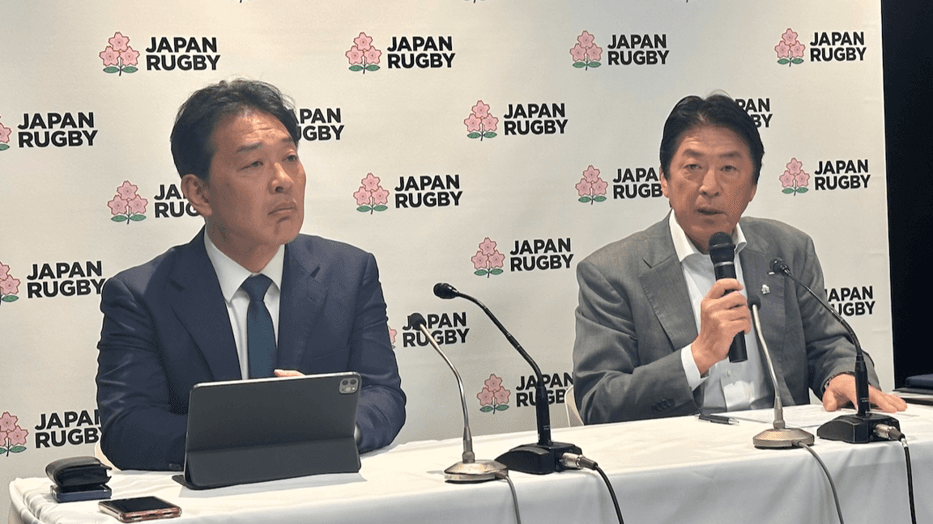
In January 2026, the Japan Rugby Football Union officially submitted its formal Expression of Interest as a candidate nation to host the Rugby World Cup 2035, with Spain so far the other nation to have formally done so.
Japan hosted Asia’s only Rugby World Cup 15s tournament in 2019, which is still largely remembered as a successful event - but what will Japan need to do to impress upon World Rugby as they work through the next phase of the Host Selection process, and how successful have the recent Rugby World Cups been for the host nations and rugby unions?
With Australia and then the USA due to host the next Men’s and Women’s Rugby World Cups, the bidding process in 2035 departs from the dual-bid hosting model World Rugby implemented.
More importantly, in a draft World Rugby Strategy document we have seen, the governing body confirmed that 90% of World Rugby revenues come from the Men’s RWC and all of World Rugby’s net surplus and ability to invest in the Game comes from the Men’s RWC - so with Australia and the USA hosting the next two Men’s and Women’s tournaments, and with there being a high amount of risk with the US hosting the tournaments, RWC 2035 could be a commercial safety net if there are revenue failures.
The game is facing financial stress, and the host of the RWC 2035 needs to be not only a commercial success but also offer a feel-good and sustainable impact.
The Men’s RWC 2023 in France surpassed Japan’s RWC in 2019 to become the most commercially successful and watched rugby tournament in history.
It yielded more than 1.33 billion viewing hours, 4 billion social media impressions and a tournament that generated a €871 million economic boost - and more than 2.4 million fans were in attendance in the magnificent stadiums. No tournament is without hiccups, but by and large, it was a well-run tournament, or so you would think.
With the economic impact heralded at the time by World Rugby, and as many as 425,000 international visitors and 39% of tourist spending benefiting regions outside host cities, it was a financial success for the sports governing body.
Each Rugby World Cup also has locked-in legacy projects. In France, these were:
The promotion of sustainability via green mobility - 80% train/bus travel for teams, recycling waste into benches for clubs
Funding of 3,000+ young people through "Campus 2023" training
First-ever International Wheelchair Rugby Cup
Initiatives aimed to boost women's rugby participation and improve facility accessibility for people with reduced mobility.
World Rugby also published selected factors such as the reach and penetration into markets deemed to be emerging, such as Germany and the USA. As much as 85% of global viewers accessed RWC 2023 via free-to-air TV.
RWC France 2023 was the most viewed rugby event of all time.
France 2023 achieved 30 per cent more viewership than England 2015 and 19 per cent more than Japan 2019, despite a general decline in linear TV viewing globally.
Streaming services accounted for five per cent of global viewership.
Japan ranked as the country with the third most viewership for RWC 2023, cumulating 175.9m viewing hours over the seven weeks.
Despite all of these successes, a 2025 report by the Court of Auditors in France pointed to financial mismanagement that led to lower-than-expected funds for French rugby development and highlighted “the financial shortcomings of the tournament, which meant that French rugby has been left with no funds to build on.”
An estimated public funding (€70m or US$82m) was used for security, stadiums and fanzones covered by tax revenue generated by the event (€84m or US$ 99m).
The state's financial watchdog said on Tuesday, April 8, 2025 that the blame lay with issues caused at the time with the first head of the tournament's organising committee, Claude Atcher, but also French federation (FFR) and the government had to bear some responsibility "because of major failures in the control they should have exercised over the organizing committee."
The report added that despite promises that the tournament would generate big profits, it led to heavy financial losses, especially for the FFR. "Everyone won, except the (French) organisers," the court's president Pierre Moscovici said at a press conference.
Financial losses could reach up to nearly €29 (US$34m) million once related legal cases are resolved. The FFR had projected that the event would bring in at least €69 (US$80m) million. In comparison, in 2007, the Rugby World Cup in France generated €33 (US$39m) million in profit.
You can't compare the commercial value of the Men’s and Women’s Rugby World Cups, but the 2025 Women's Rugby World Cup had a legacy focusing on transforming women's rugby through massive participation growth, and targeted 100,000 new players by 2027.
This was supported by over £12 million in UK government funding as the "Impact '25" programme invests in 850 clubs, upgrading facilities and enhancing the visibility of female role models.
The tournament broke all previous records for a women’s Rugby World Cup and culminated in a record-breaking final at Twickenham. The dual Women’s Rugby World Cup 2025 Impact & Impact Beyond 2025 Global Impact Reports released in February 2026 stress the impactful nature of the tournament.
The 2027 Rugby World Cup in Australia is projected to generate over AUD$2.5 (US$1.77) billion in total economic output (direct and indirect) and over AUD$1.3 (US$.092) billion in direct visitor expenditure.
The tournament is expected to attract over 250,000 international visitors. Rugby Australia also expects to use the tournament to lift revenue from media rights, match-day tickets, and sponsorships, helping to establish a AUD$100 (US$70) million "future fund" for the sport.
In terms of increasing rugby participation, a goal of reaching 200,000 participants by 2029 has been set.
In 2019, one USD was worth 109 Japanese Yen, and it's now around 160 Yen - the devaluation has led to a tourism boom over the past 18-24 months in Japan, but also put the Japanese tourism infrastructure under strain, and increased inflation and costs have been bad for the average Japanese person.
Based on recent Japan Rugby League One (JRLO) ticket information, attending a match is relatively affordable, with general admission tickets typically costing under US$25 (approx. ¥3,500–¥4,000) and main stand seats rarely exceeding US$70 (approx. ¥10,000).
In 2017, World Rugby and Asia Rugby launched a program for sustainable rugby growth and to attract one million new participants in Asia is the aim of the Impact Beyond 2019 programme. After the tournament, it was hailed as a success, but there have been constant question marks over the actual impact and numbers reached.
World Rugby said that 2.25 million people were introduced to rugby in Asia via the Impact Beyond programme (769,000 children involved in tag rugby in elementary schools in Japan). At the time, playing numbers in the region were promoted as being 356,000 in 2009, and 562,000 in 2016. Part of the million target at the time included 200,000 active participants at all levels in Japan.
In 2017, the President of Japan Rugby 2019, Tadashi Okamura, said: “Japan Rugby 2019’s mission is to contribute to a better society by playing an active part in the world. In 2019, Japan will become the first Asian nation to host the Rugby World Cup. The success of RWC 2019 is the biggest challenge in the history of Japan rugby.
Rugby fans from all over the world attended 12 host cities across Japan for Rugby World Cup 2019, with 19 local governments of the 12 match venues involved in the organisation of fan zones and fan experiences, while the slogan for the tournament was ”One Team”, signifying the country’s collective effort in staging such a festival of rugby.
The JRFU also worked and continues to do so with several development projects such as the Asian Scrum Project, which was founded in 2011 to support rugby development within Asia, Sport For Tomorrow, the JICA volunteer programme, and the JENESYS programme.
Akira Shimazu, the former CEO of Rugby World Cup 2019 Organising Committee, said, “The Rugby World Cup 2019 was an unforgettable event which will be remembered by many people for years to come.
A report on the economic impacts of the Rugby World Cup 2019 in Japan, and the EY (Ernst & Young) report, indicated the tournament generated £4.3 billion in output and added £2.3 billion to Japan’s GDP.
242,000 international fans from 178 nations stayed an average of 17 days, visiting five cities on average.
More than 60 per cent of fans were visiting the country for the first time, while their daily spend was 4.6 times higher than that spent by the average visitor to Japan in 2018.
The RWC 2019 tournament attracted a record 1.13 million people to official fan zones and a record 99.3 per cent attendance with 1.84 million tickets sold across the 12 venues.
The total cumulative audience of 425 million tuned into RWC 2019, more than five times the Japanese viewership for England 2015.
Significant rugby and community sports infrastructure legacy, including Kamaishi Recovery Memorial Stadium
There was a 33 per cent increase in ‘niwaka fans’ or new fans during the tournament, supporting the Brave Blossoms reaching a first RWC quarterfinal
The data is there, the Japanese Rugby Football Union’s will is there - and the economic model could see the tournament benefits World Rugby and Japanese rugby, but will it be the right destination for RWC 2035? Stay tuned for part 2.