Advertisement

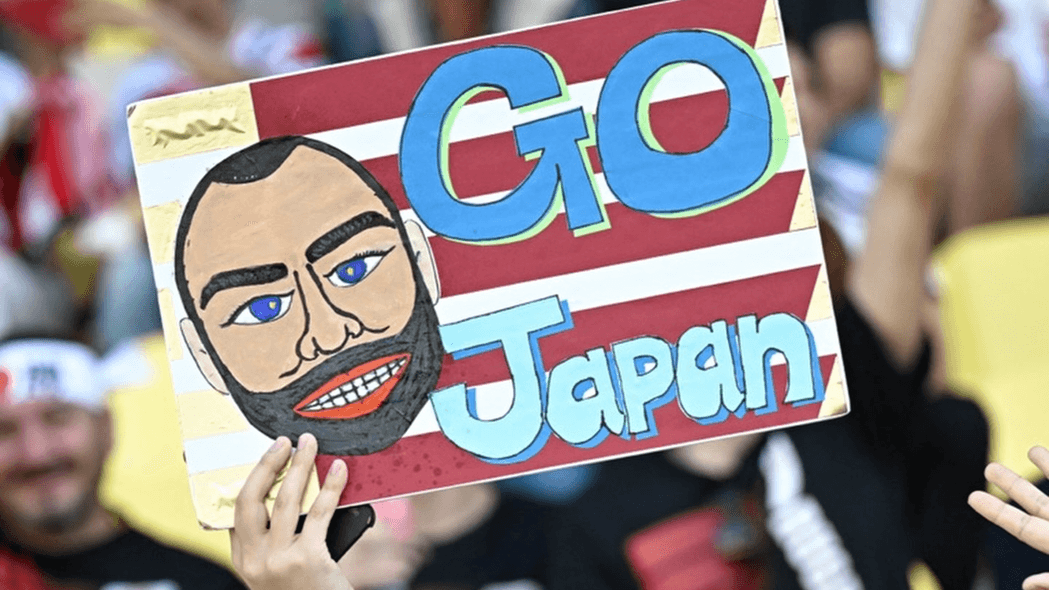
Despite all of the reasons for why RWC 2019 was a successful tournament in Japan - the country (and globally) there were missed opportunities due to the global pandemic and in-house issues that prevented the growth of the sport which had been predicted.
The data after the RWC 2019 in Japan suggested the sport was about to explode.
83 per cent of people in Japan believed that hosting the Rugby World Cup generated a positive legacy for rugby, delivering future major rugby event hosting opportunities for Japan
50 per cent of those in Japan who followed the Rugby World Cup 2019 had become interested in the sport in the last year.
54 per cent of those in Japan who followed the tournament were doing so for the first time
74 per cent of Japanese people who were aware of the Rugby World Cup believe that the tournament will encourage more children to play the sport
But as we all know, the world shut down due to the global pandemic and the expected growth was stunted.
There are reports that there was a spike in participation in the positivity of the RWC 2019 and of the Brave Blossoms immediately after the tournament, before lockdowns halted all activities, as strict protocols were implemented
There are also accusations that the JRFU didn't manage its grassroots effort well in the period, and many clubs and schools were not prepared for the rise in interest of the sport immediately after the tournament in terms of lack of playing space and, in particular, qualified coaches.
Another raised issue was that the World Rugby and JRFU so-called increase in playing numbers was mainly in tag rugby, but the pathways for kids introduced to the sport had no real pathway or transition moving into junior high schools and into contact rugby. This criticism remains of the JRFU today, that investment in the grassroots side of the game has been neglected, leading to a decline in rugby in younger age groups and outside of the traditional popular areas for the sport.
Seven years on and question marks remain over the growth of rugby in Japan, which has such a long-standing history and rich culture with the Schools, Universities and Clubs, with the Japan Rugby League now in its 5th season.
The number of fans attending Japan Rugby League One matches in the 2025-2026 season has generally been on the rise compared to previous seasons, but data also shows a decline in high school and university playing numbers and crowd attendances despite the deep-rooted tradition and history of those competitions in Japan.
Average attendances in Japan’s top rugby union competition were around 5,000 in 2016 and in the current 2025/2026 season are closer to 14,000 per match. The average Super Rugby crowds in New Zealand were 12,526 (across the past two seasons), 12,049 in 2025 in Australia, and close to 17,000 in France’s Top 14 in 2024/25.
While the number of purpose-built rugby stadiums in the country might vary, and some might be too small for hosting matches at RWC 2035, the country’s infrastructure is excellent and well-suited for hosting the tournament.
The obvious benefits are that there will be a rekindling of the feel-good factor in Japan, and existing and new fans will be able to watch the Rugby World Cup in the country, which will also have positive impacts on the tourism and economy.
We won't know any details for some time, as the timeline set out for World Rugby’s RWC 2035 Host Selection Timeline bidding process is as follows:
October 2025: Launch of expressions of interest
Q3 2026: Submission of detailed applicant questionnaires
Late 2026 – early 2027: Site visits and feasibility assessments
May 2027: Identification of preferred host
November 2027: Formal appointment by World Rugby Council
There could also be the regional knock-on effects as rugby fans might add-on trips to other countries in Asia. We have also heard whispers that the JRFU RWC 2035 bid might well be a multi-regional aspect that will see matches hosted in the likes of Hong Kong, South Korea and elsewhere but for now this is speculation.
JRFU Chairman Tsuchida Masato said that the tournament will be an "all-Japan tournament" (contradicting the rumours of matches being held elsewhere in Asia), noting that "the scale of the tournament is getting bigger every year.". He added, “We want to make RWC2035 the best Rugby World Cup not only for the rugby world, but for the sports world, for Japan and the world.”
JRFU Executive Director Kensuke Iwabuchi said that one of the four principles that World Rugby outlined when announcing the host country selection process was "commercial optimisation," and the profitability of the tournament will be a major point.
He commented, “The Japan Rugby Football Union wishes to bring the Rugby World Cup back to Japan in the near future. The World Cup is not an event we, as the JRFU, can host solely through our own efforts. We would need to draw on the collective strength of all Japan, with the cooperation, understanding and commitment of people from all corners of the nation.”
We anticipate there is a global fan desire for the Japanese to host the tournament again, but Spain’s bid could be a real challenge, and Italy has been rumoured to bid.
One other region is rumoured to be interested and backed by Asia Rugby too, with a joint Qatar, UAE, and Saudi bid touted - but this has caused regional splits already - and Asia Rugby said it will back any bid from the three countries. However, it would be by far the least popular among the global fan base.
Any potential financial incentives the collective Middle East/Gulf region could offer would far outstrip what Spain or Japan could offer to World Rugby, and this may well capture the attention of the sports governing body Rugby decision-makers.