Advertisement



Stockdale (14', 78'), Herring (34'), O'Toole (41'), Stewart (47'), Wilson (58'), Flannery (67'), Ward (72', 82')
Tries
Gibert (7')
Murphy (15', 35', 48', 58', 67', 73', 79', 82')
Conversions
Gibert (8')
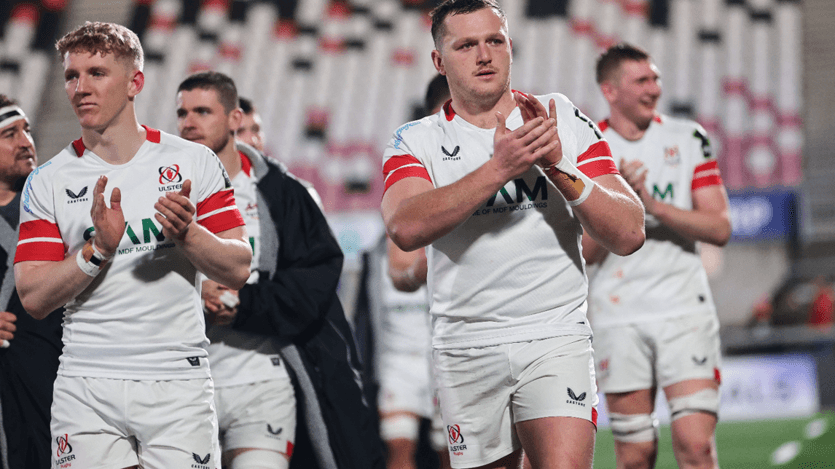
Ulster opened their European campaign with a nine-try statement, swamping Racing 92 by 61–7 at the Affidea Stadium and turning a nervy opening into a procession. Racing struck first — an early intercept from Antoine Gibert on 8 minutes, the fly-half converting his own score — and for a spell the visitors’ kick pressure and scramble defence made the home crowd fidget. Ulster’s answer was calm and decisive: on 15 minutes Jacob Stockdale finished the first well-constructed attack of the night, and the conversion leveled matters at 7–7.
From there the hosts tightened the screw. Territory and set-piece began to bite; exits were neat, the chase accurate, and the breakdown speeded up. Hooker Rob Herring crashed over on 35 minutes after a sustained sequence in the 22, the extras pushing Ulster 14–7 ahead at the break — a lead built on patience rather than panic after the early punch.
The second half was one-way traffic. Within two minutes of the restart Tom O’Toole thundered over (42’) to open the floodgates, and Tom Stewart followed on 48 minutes as Ulster’s maul-and-carry game overwhelmed the visitors’ tight five. Racing’s defensive line lost its shape, their exits shortened, and the penalty count began to stack. Scott Wilson’s finish on 59 minutes rewarded relentless pressure, before Jake Flannery cut a clever line to score on 68 minutes as the home side began to enjoy themselves in broken play.
The closing stages showcased depth and hunger. Replacement back-rower Zac Ward arrived with intent, bagging a brace on 73 and 83 minutes — the first from close range after repeat phases, the second sealing a length-of-the-field surge once Racing’s resistance had evaporated. Between those, Stockdale completed his own double on 79 minutes with a winger’s finish in the corner. The place-kicking was pristine throughout: eight conversions sailed over, ensuring Ulster maximised every visit.
What stood out was the control: Ulster absorbed an early setback, trusted their plan, and then accelerated with ruthless clarity. The pack delivered clean platforms; the half-backs varied tempo; the back three bossed the aerials. Racing, by contrast, never recovered after half-time — discipline slipped, collisions were lost, and the tackle line frayed.
As opening salvos go, this was emphatic. Ulster showed they can win tight minutes and explode in the loose, turning a 7–7 arm-wrestle into a statement scoreboard. If they were looking to plant a flag in Europe, 61 unanswered points after the interval is hard to miss.