

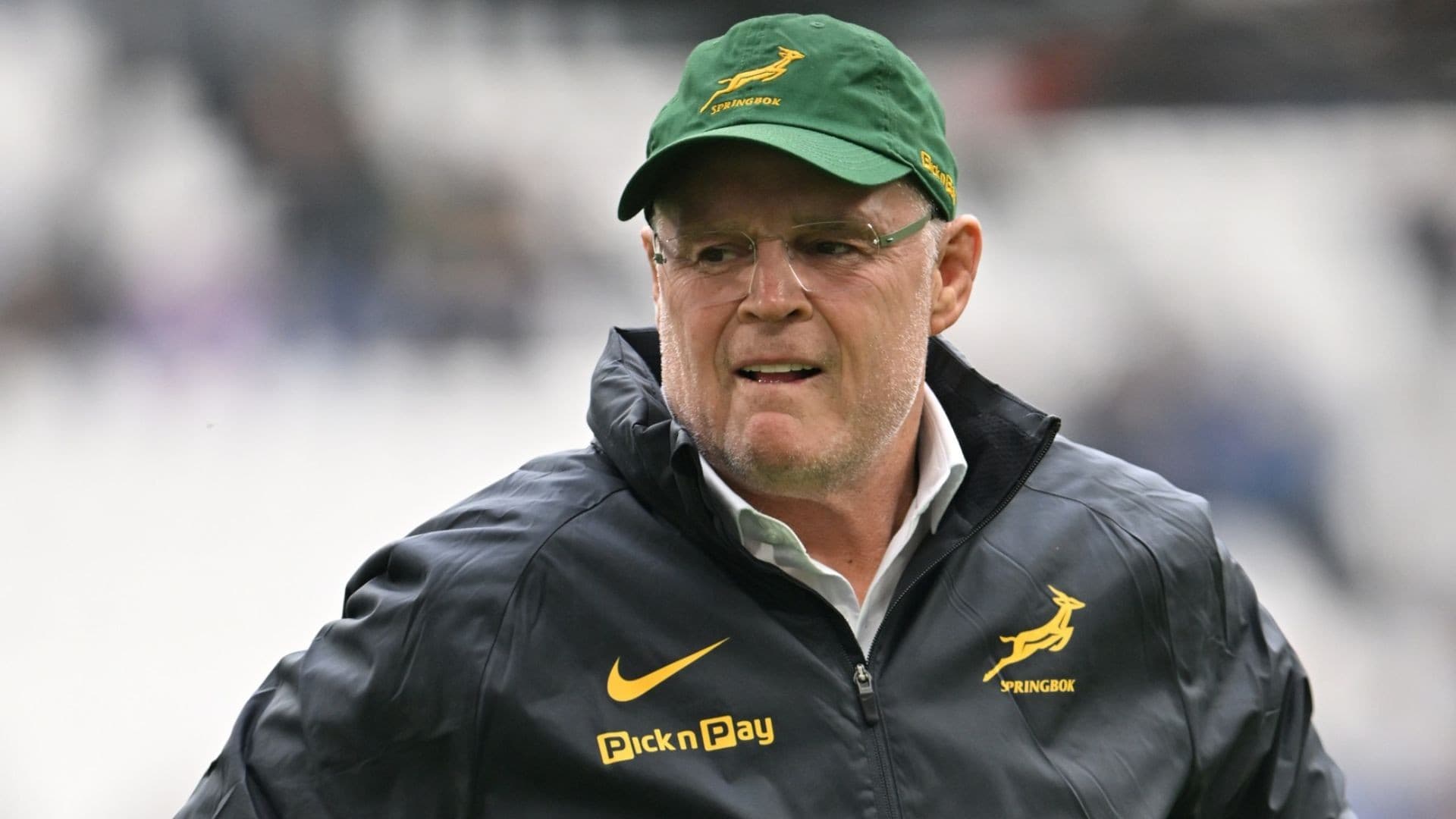
SA Rugby have asked for a full misconduct hearing for Rassie Erasmus, a day after World Rugby suspended the Springboks head coach for six international matches with immediate effect. The union said it respected the process but wanted its coach to be allowed to contextualise his comments and to assure the panel that he did not intend to allege that any match official had acted with ulterior motives. It added that it trusted the hearing could be expedited given the seriousness of the charge, and that it would make no further comment until the hearing was completed.
The practical question is whether that request alters Saturday's Test against Ireland at the Aviva Stadium. On the face of what has been published, it does not. World Rugby's statement says the sanction applies immediately, and it simply notes that Erasmus is entitled to have the matter referred to a full hearing. A hearing is a route to a different outcome, not a pause button, and the speed of any hearing will matter more than its eventual result for this week. Unless it is convened within days, Erasmus will be absent from the coaches' box in Dublin, and the Springboks must plan accordingly.
The suspension is broad. According to World Rugby, it covers coaching, entering the stadium, coaches' box, playing enclosure or technical area, direct or indirect contact with players or team management on match days, dealings with match officials including the feedback process, and all media duties. For a coach who traditionally shapes the Springboks' game through the match-day structure around him, the contact ban is the part with the most bite. It also runs beyond this week: the Irish Times reported that it takes in the finals weekend at Twickenham and South Africa's first four Tests next year, which are yet to be confirmed.
Ireland v South Africa
Saturday 21 November, 16:40 GMT | Aviva Stadium, Dublin




Ireland


South Africa
The case World Rugby built
The sanction was imposed under the Match Official Abuse Sanction Process, introduced in July 2026 and run in parallel with Regulation 18. The panel applied an objective decision-making matrix, and the standing Match Official Abuse Committee, chaired by Adam Casselden SC, found that the comments relating to the match TMO met the threshold for serious misconduct. In its words, they suggested that officials acted with bias or deliberately influenced the outcome of a match. The timing and reach of the remarks, made at a Monday press conference, weighed in the finding of an automatic six-match suspension.
That framing shapes what SA Rugby can credibly argue. The process is designed to be mechanical, and the matrix tests the comments as they were made, not the speaker's intent. A plea that no ulterior motive was meant is therefore a mitigation point that has to persuade a panel the matrix was misapplied, which is a harder case than simply explaining a tone. The Irish Times reported that Erasmus spoke for about 35 minutes at the team hotel in Dublin, and The42 reported that he raised the words 'match-fixing' and 'manipulation of the game' in relation to foul play not picked up live. Those are the remarks the hearing would have to deal with.
The history will not help him. The Irish Times and The42 both note that this is Erasmus's third sanction for comments about officials, after a two-month ban in 2021 and a two-match ban in 2022. World Rugby's statement also stresses that teams have established channels for raising officiating concerns before and after matches, and that challenging a decision is not the same as questioning an official's integrity. A panel that wrote that sentence is unlikely to be moved by an argument that the press conference was simply the available outlet.
For South Africa, the next fixture demands an orderly handover. The Springboks go to Dublin after a 21-19 defeat by France with their head coach barred from any contact on the day, and the assistant staff will carry the match-day calls. The more telling test may come in the week after, when the finals at Twickenham arrive with the same restrictions in force and a hearing that has still to be heard. If SA Rugby's request is to achieve anything, it will need to be granted quickly, because each match played under the ban reduces what a reduced sanction would be worth.