Advertisement



D. Fourie (14'), S. Senatla (55'), Penalty Try (77')
Tries
S. Taukei'aho (5'), S. Parker (38'), R. Ioane (66'), L. Carter (71'), J. Moorby (75'), A. Aumua (80')
Y. Ahmed (15', 56')
Conversions
B. Barrett (5', 39', 67'), J. Jacomb (72')
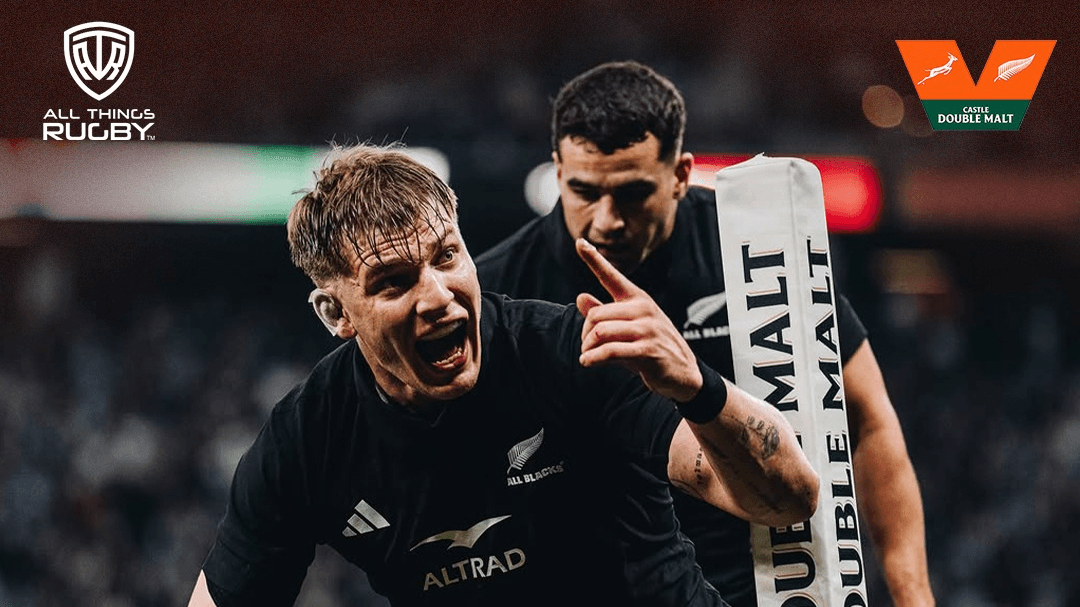
New Zealand opened Rugby’s Greatest Rivalry tour with a 38–21 victory over the DHL Stormers at DHL Stadium on Friday night, but their six-try success was secured only after a contest that remained level well into the final quarter. The All Blacks led 14–7 at half-time and were tied at 14–14 after 56 minutes before their greater depth turned a demanding tour opener into a comfortable-looking result.
The match began New Zealand’s eight-game itinerary, their first full-scale, old-style tour of South Africa since Sean Fitzpatrick’s 1996 side.
For much of the first hour, the Stormers gave New Zealand exactly the kind of examination Dave Rennie would have wanted, even if he will not have enjoyed all of it. The hosts attacked the scrum, competed ferociously on the floor and forced a normally measured side into 16 penalties, 15 turnovers and three yellow cards.
Samisoni Taukei’aho’s early try suggested the tourists might settle quickly, but their discipline soon deteriorated. Anton Lienert-Brown and Simon Parker were sent to the sin bin within 90 seconds of each other, briefly reducing New Zealand to 13 men. Deon Fourie drove over during that spell and Yaqeen Ahmed converted to level the scores. The crowd’s loyalties were not one-sided — Cape Town’s established All Blacks following made itself heard — but the roar behind the Stormers’ scrum and defensive pressure gave the occasion a harder edge than an ordinary franchise fixture.
The Stormers had already lost reserve tighthead Sazi Sandi before kick-off, with Herman Lubbe brought onto the bench. Their planned youthful half-back experiment then lasted less than four minutes. Imad Khan left injured and Dewaldt Duvenage was required far earlier than expected, placing more responsibility on 20-year-old Ahmed.
The flyhalf responded with nerve. He converted both conventional tries, attacked the line for 44 metres and mixed five kicks from hand into his game, although a missed drop-goal attempt before half-time and several pressured moments reflected the scale of the assignment. When Duvenage was also forced off injured in the 69th minute, the hosts finished with Wandile Mlaba at scrumhalf.
New Zealand recovered from their two-card spell through Parker’s try shortly before the interval. Beauden Barrett converted that score, as he did all three All Blacks tries scored before he was replaced in the 68th minute. On his first appearance of the year and his first under Rennie, Barrett’s value was found more in composure than spectacle. He distributed accurately, chose his moments to kick and allowed Cortez Ratima and Lienert-Brown to share the territorial work. It was controlled rather than commanding, but after the disorder of the opening quarter, control mattered.
The Stormers came again after the break. Seabelo Senatla’s finish and Ahmed’s conversion made it 14–14, a reward for a pack in which the experienced players carried much of the resistance. Fourie scored, won two turnovers and completed 13 tackles before leaving. Hacjivah Dayimani supplied the loose trio’s running threat, beating four defenders, while Evan Roos and Dayimani each made 14 tackles. André-Hugo Venter’s lineout work, Neethling Fouché’s defensive load and the contributions of Warrick Gelant and replacement Ntuthuko Mchunu ensured the Springbok-capped contingent was more than decoration. Captain Ruhan Nel’s injury early in the second half, however, removed an important organiser.
The late withdrawal of Wallace Sititi did not ultimately weaken New Zealand’s loose-forward balance. Anton Segner made 10 tackles without a miss, while Peter Lakai’s move to number eight produced 17 tackles, two clean breaks and six defenders beaten. Parker’s three penalties and yellow card were costly, but he also scored. Around them, Patrick Tuipulotu played the full match, helped keep an otherwise unsettled pack connected and shared in a lineout that won every New Zealand throw and stole two from the Stormers.
The decisive shift came from the visitors’ bench. With the score level, Ollie Norris, Sam Darry, Ethan Blackadder and Asafo Aumua entered between the 56th and 62nd minutes. New Zealand then scored through Rieko Ioane, Leroy Carter and Josh Moorby in an eight-minute burst. Caleb Clarke, introduced earlier after Billy Proctor’s injury, added direct carrying, while Aumua finished the scoring after the Stormers had been awarded a penalty try and Moorby had received New Zealand’s third yellow card.
For the Stormers, an hour of parity and sustained set-piece pressure offered encouragement, especially given the disruption at scrumhalf. For New Zealand, the closing surge confirmed the value of their touring depth, but the penalty count and three cards will require attention before Durban and the four-Test series against the Springboks. This was a useful win, not a flawless one — precisely the kind of opening-night lesson an old-style tour is designed to provide.